Road signs in Uganda and their meanings
95 traffic signs you will meet on Ugandan roads, each with a picture and what it means for you as a driver or rider. Learn the shapes first, then the signs.


Read the shape before the symbol
- Red triangle: warning
A hazard is ahead. Slow down and get ready.
- Red circle: prohibitory
Something you must not do, such as no entry, no overtaking or a speed limit.
- Blue circle: mandatory
Something you must do, such as turn left or keep left.
- Octagon and upside-down triangle: priority
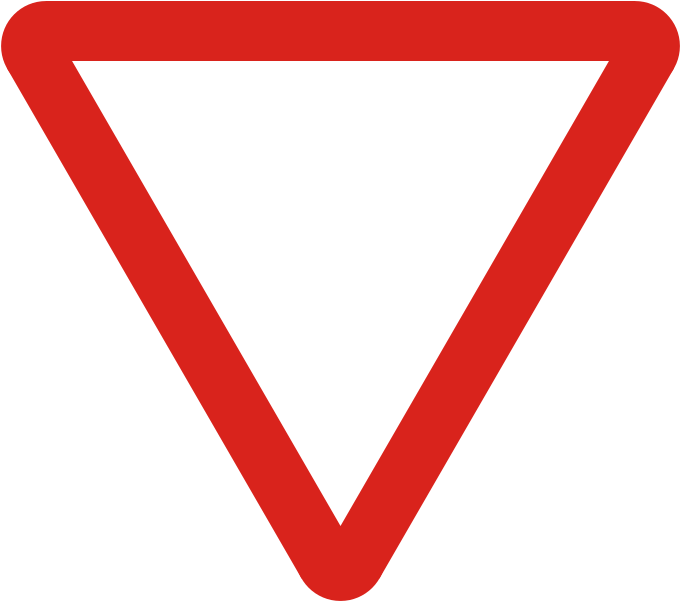
Stop and Give way. The only two signs with these shapes, so you can recognise them even from behind.
- Rectangle: information and guidance
Tells you about the road, services nearby, or which way to go.
Signs that are easy to mix up
Some of these pairs share a picture but sit in different groups, so the shape and colour change the meaning. Others look close but ask different things of you.
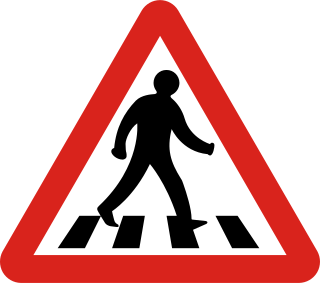
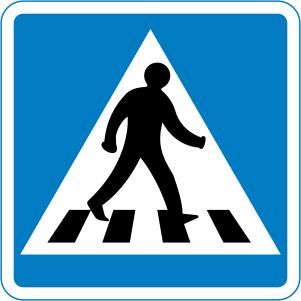 Pedestrian crossing
The red triangle warns that a crossing is coming. The blue square stands at the crossing itself, where you give way to people on it.
W43 and I01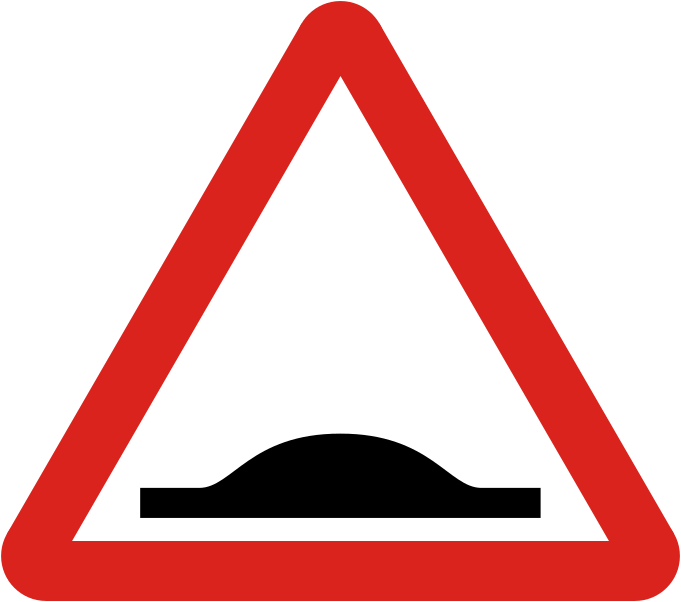
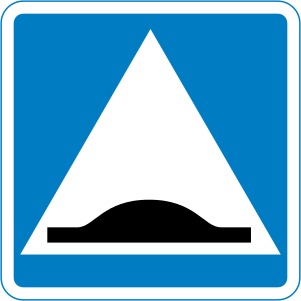 Hump
The triangle warns of a hump ahead. The blue square marks the hump where it is.
W24 and I02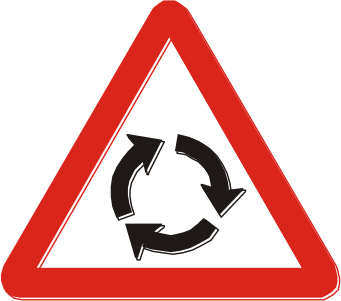
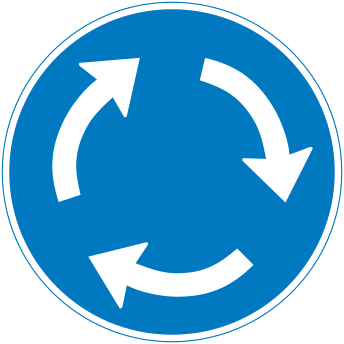 Roundabout
The triangle warns that a roundabout is ahead. The blue circle orders you to go round it in the direction of the arrows.
W09 and R77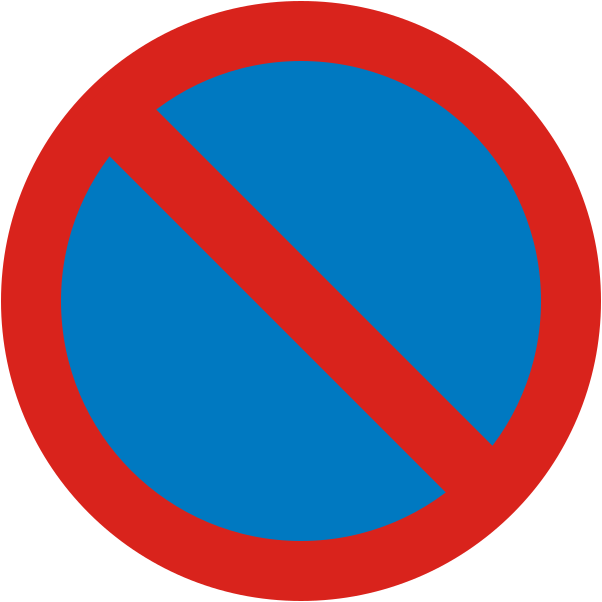
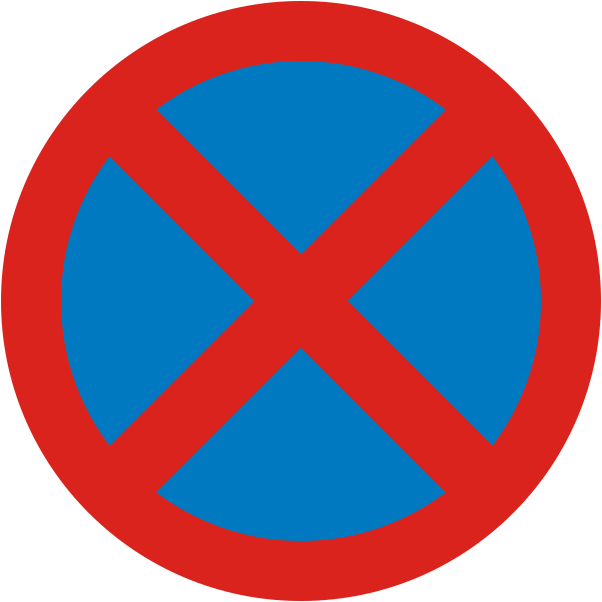 No parking or no stopping
One red bar bans parking and waiting. A red cross bans stopping at all, even for a moment.
R47 and R48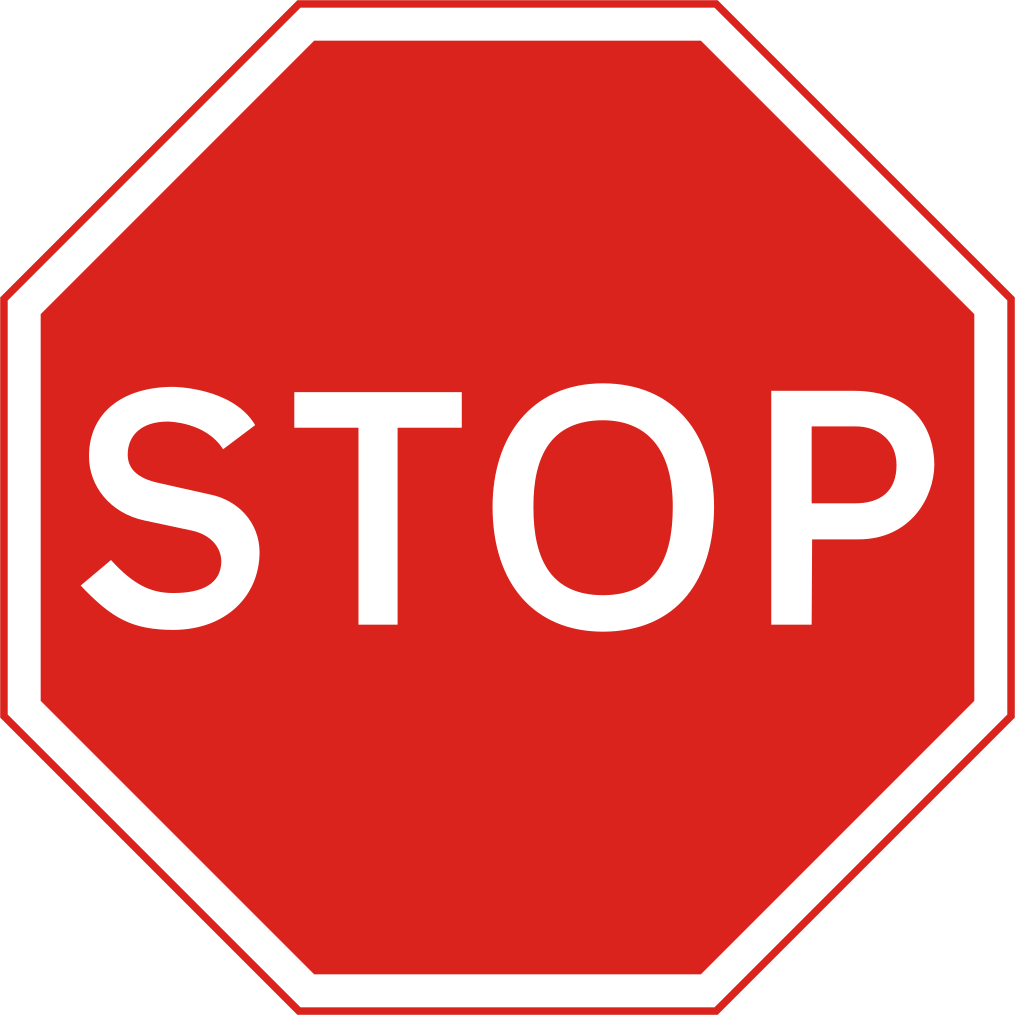
 Stop or give way
Stop means stop completely at the line, every time. Give way means slow down and stop only if traffic on the main road needs you to.
R61 and R62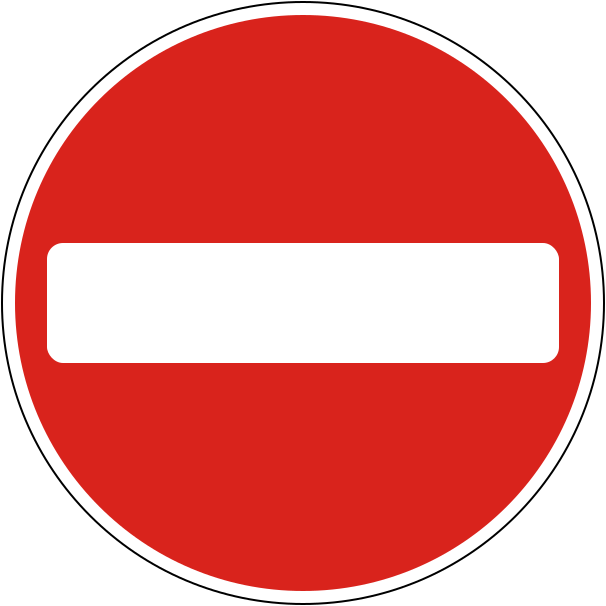
 No entry or no motor vehicles
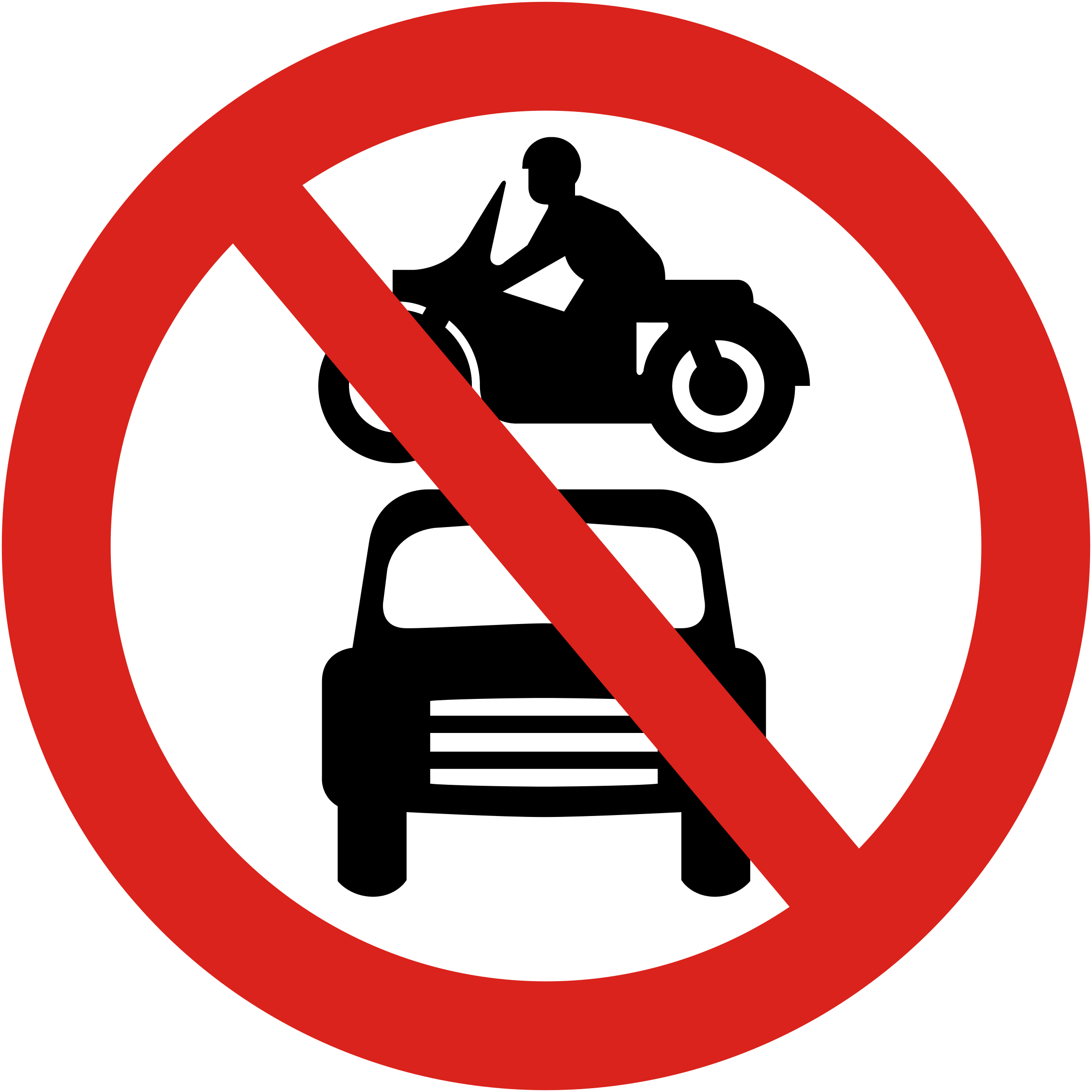
A white bar means no vehicle may enter at all. A circle with vehicles in it bans only the vehicles shown.
R01 and R02
Warning signs
Triangles with a red border. They warn you about a hazard ahead so you can slow down and get ready. They do not give an order.
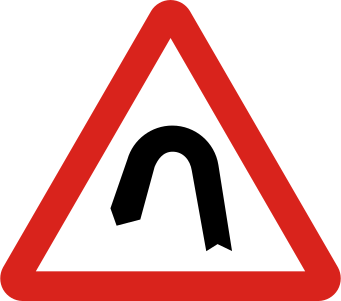 Hairpin curve
A very sharp bend ahead. Slow down before you reach it.
W02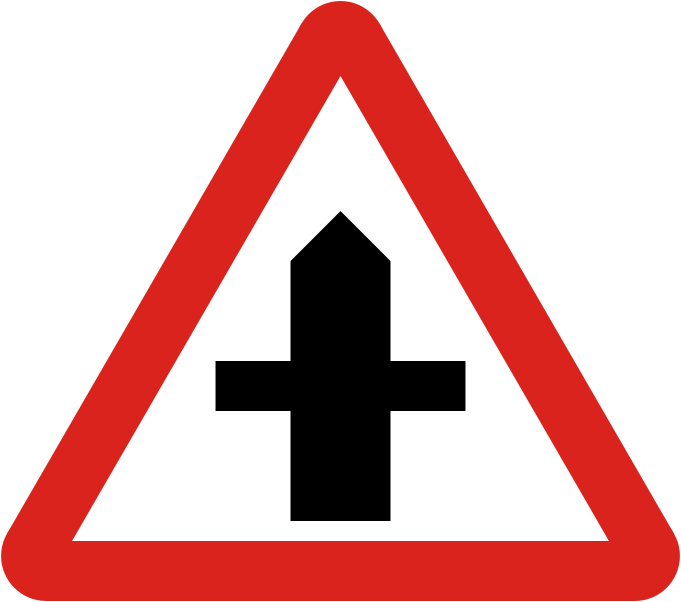 Crossroad
A crossroads ahead, with traffic able to join from both sides.
W04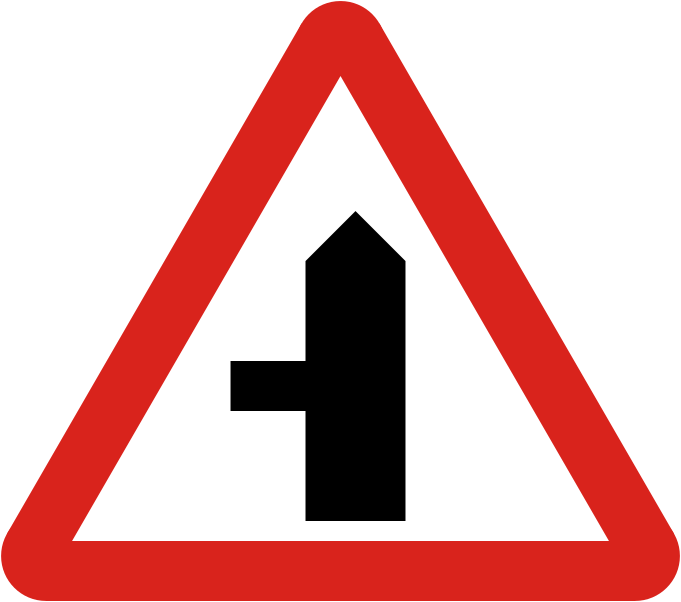 Side road
A side road joins the main road ahead. Watch for vehicles pulling out.
W05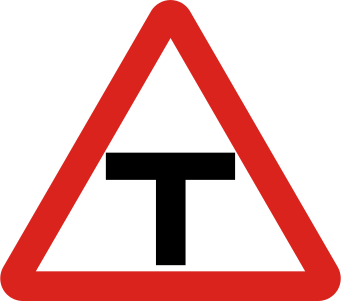 T-intersection
The road ends at a T-junction ahead. You will have to turn left or right.
W06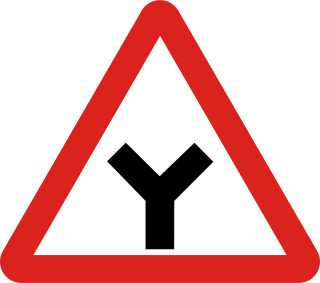 Y-intersection
The road forks ahead.
W07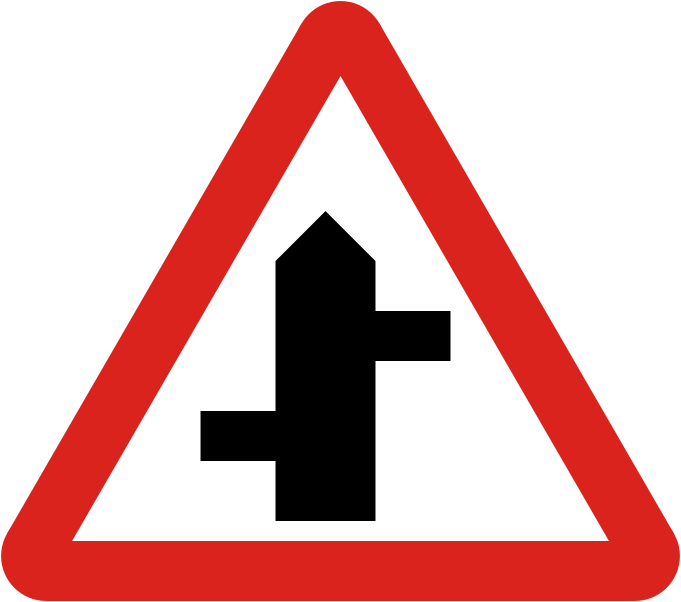 Staggered intersection
Two side roads ahead, offset from each other rather than directly opposite.
W08- Roundabout ahead
A roundabout ahead. Slow down and be ready to give way.
W09 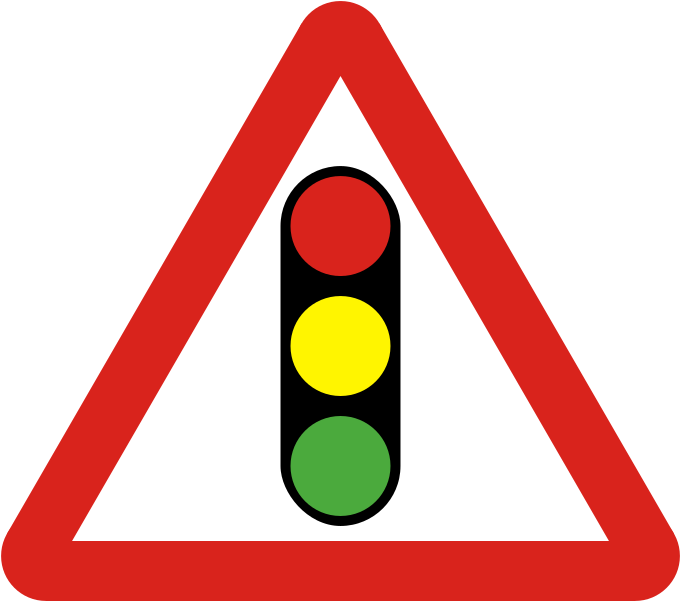 Traffic signals ahead
Traffic lights ahead. Be ready to stop.
W10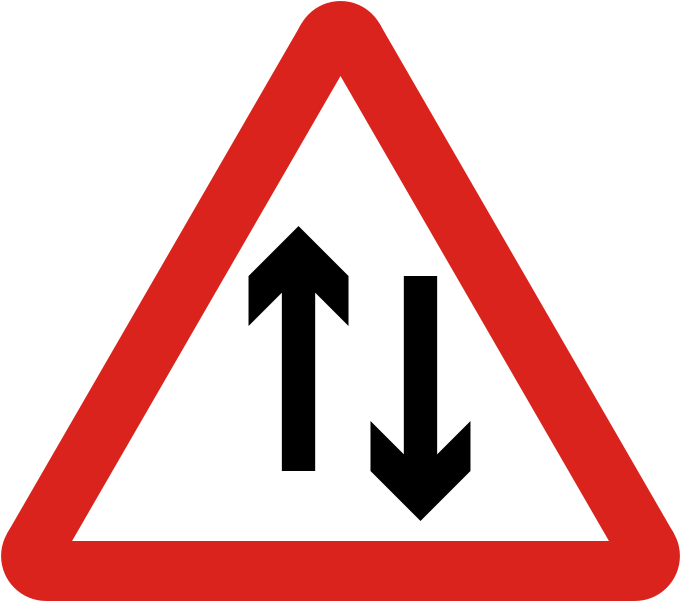 Two-way traffic
Traffic ahead runs in both directions, often after a one-way stretch or a dual carriageway.
W15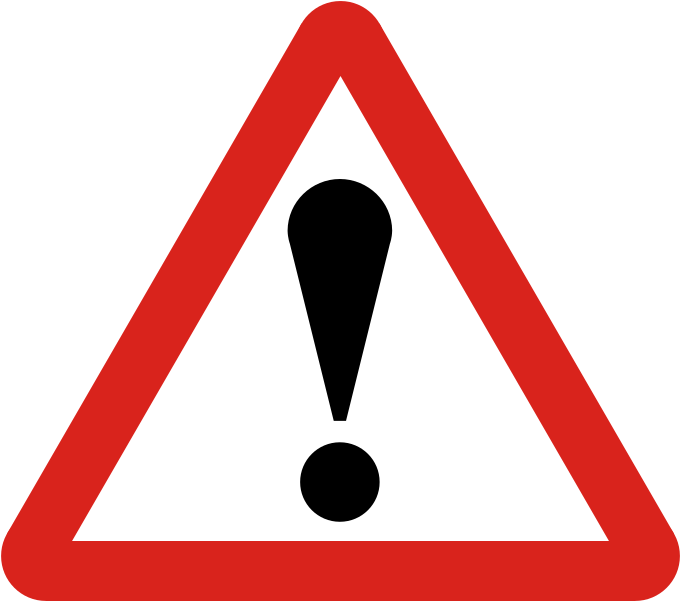 Other danger
A hazard not covered by another sign. A plate underneath usually says what it is.
W21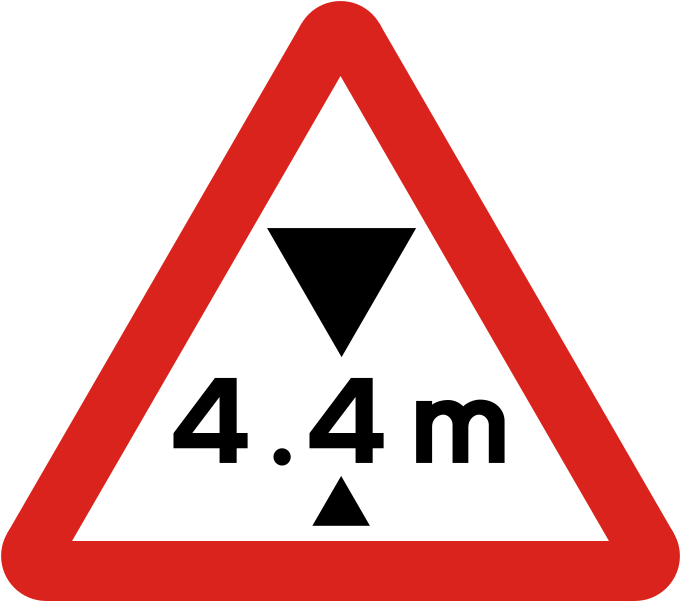 Height restriction
Low headroom ahead, such as a bridge. Tall vehicles may not fit.
W22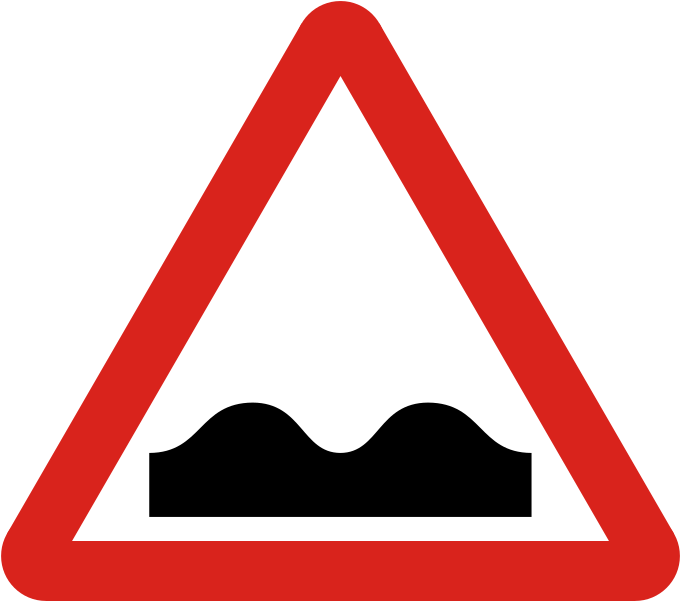 Uneven road
Bumps or a damaged surface ahead.
W23- Hump ahead
A speed hump ahead. Slow down.
W24 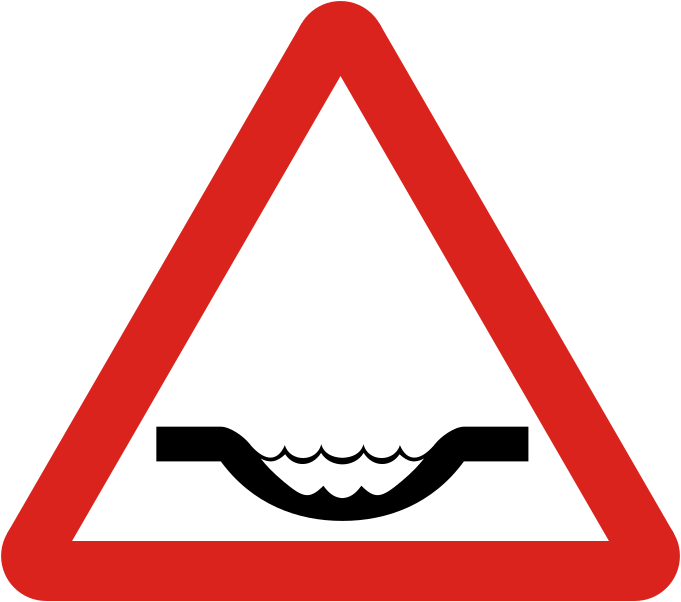 Drift
A dip where water can flow across the road.
W25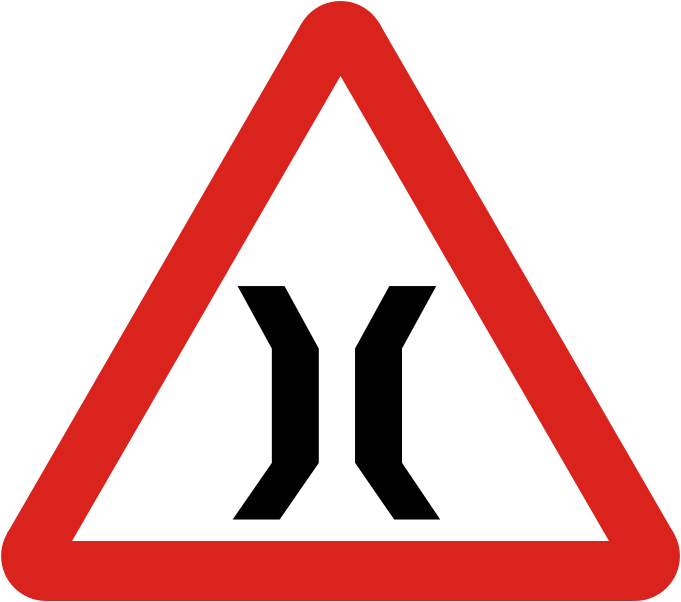 Narrow bridge
The road narrows over a bridge ahead. There may only be room for one vehicle.
W26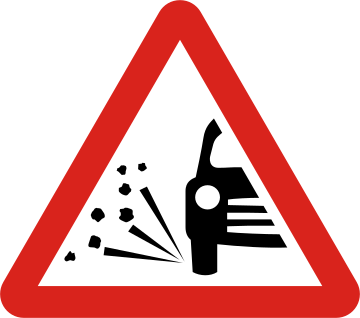 Loose gravel
Loose stones on the surface. Slow down and keep your distance.
W27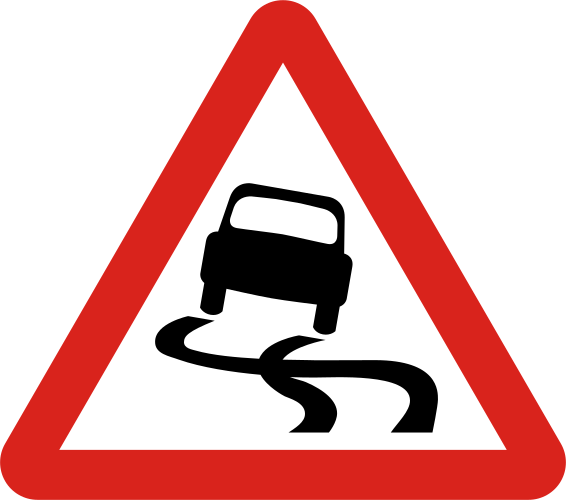 Slippery road
The road can be slippery, especially when wet. Brake and steer gently.
W28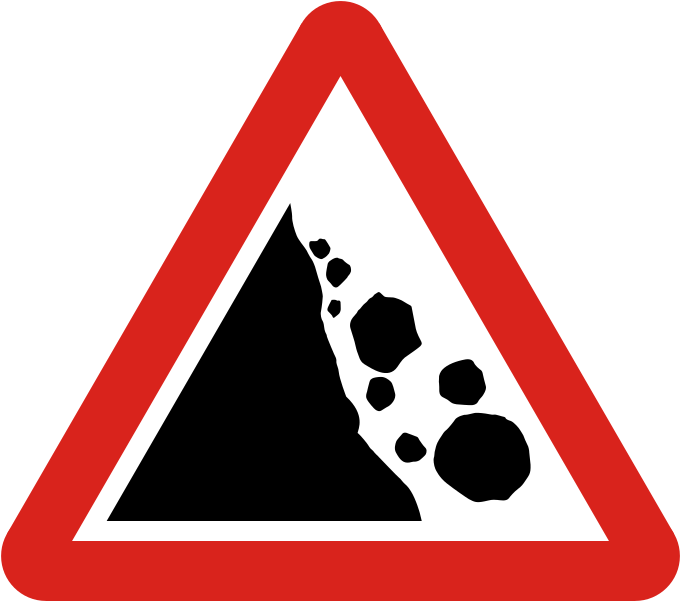 Falling rocks
Rocks may fall or lie on the road ahead.
W29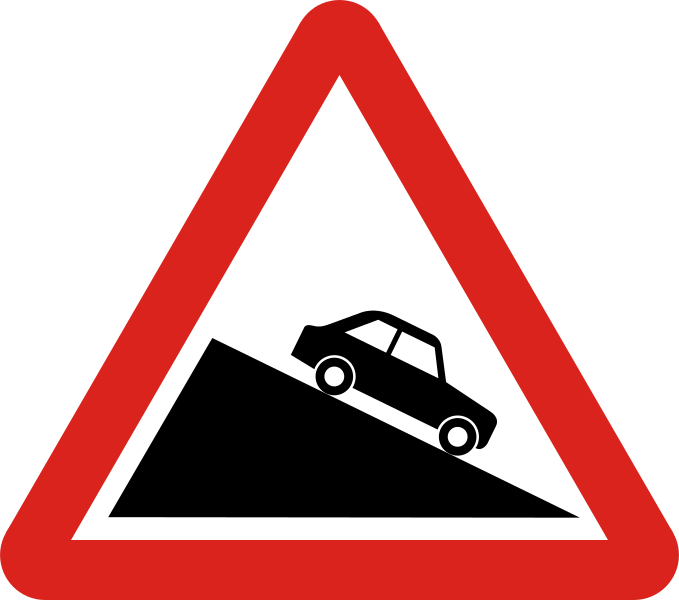 Steep descent
A steep downhill ahead. Use a lower gear.
W30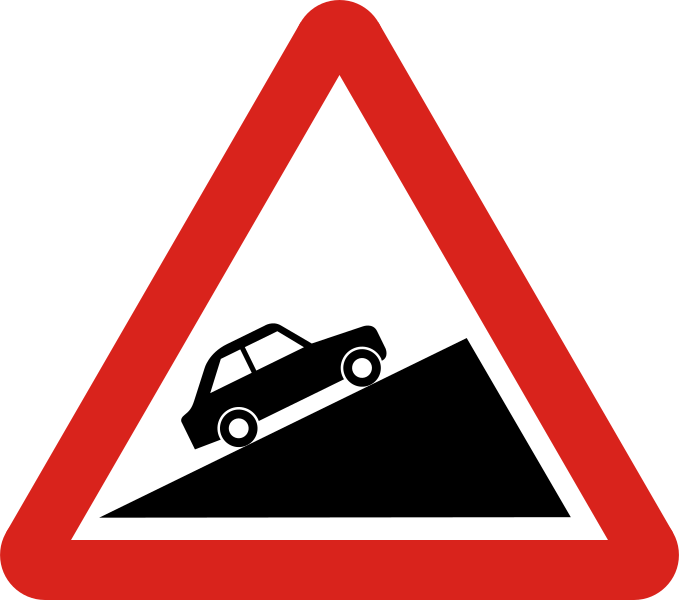 Steep ascent
A steep uphill ahead.
W31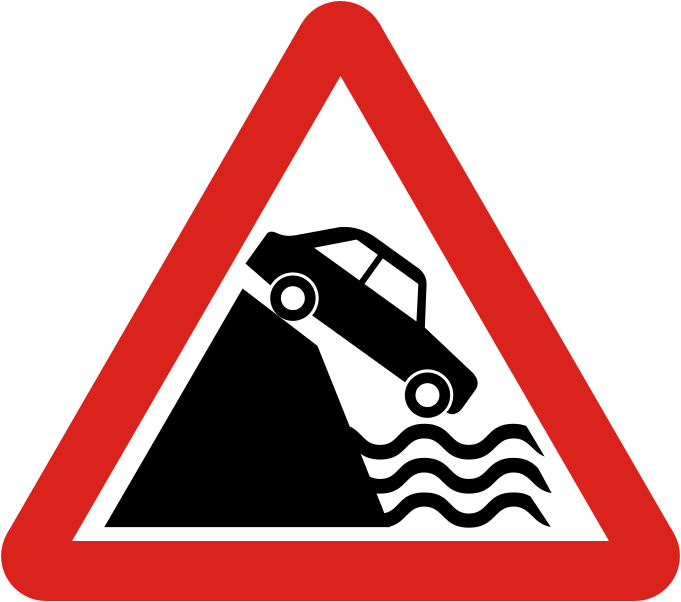 Quay or river bank
The road runs to the edge of water ahead.
W32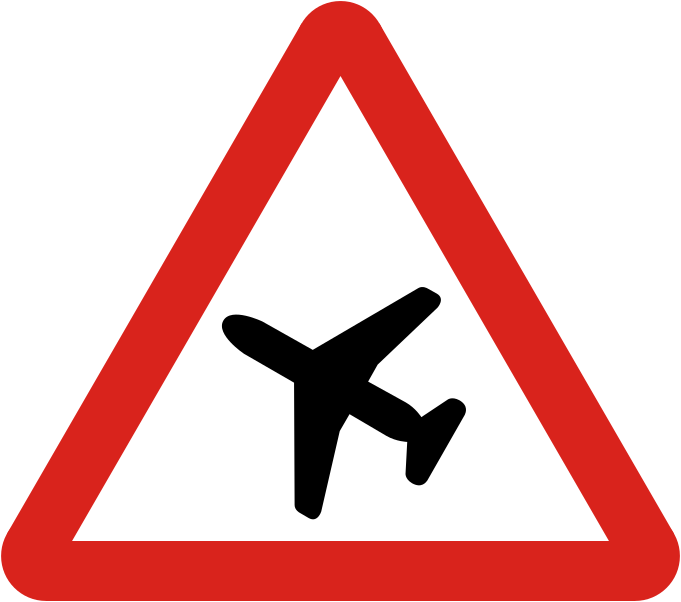 Low flying aircraft
Aircraft may fly low over the road, often near an airfield.
W33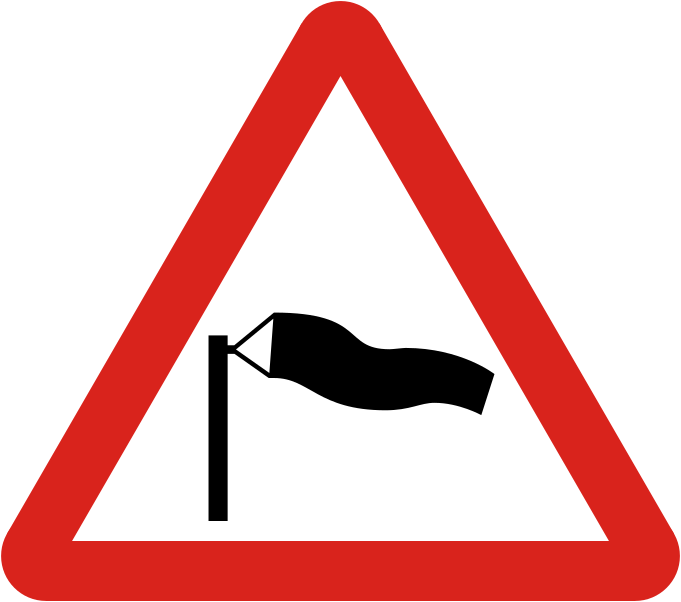 Crosswinds
Strong side winds can push your vehicle.
W34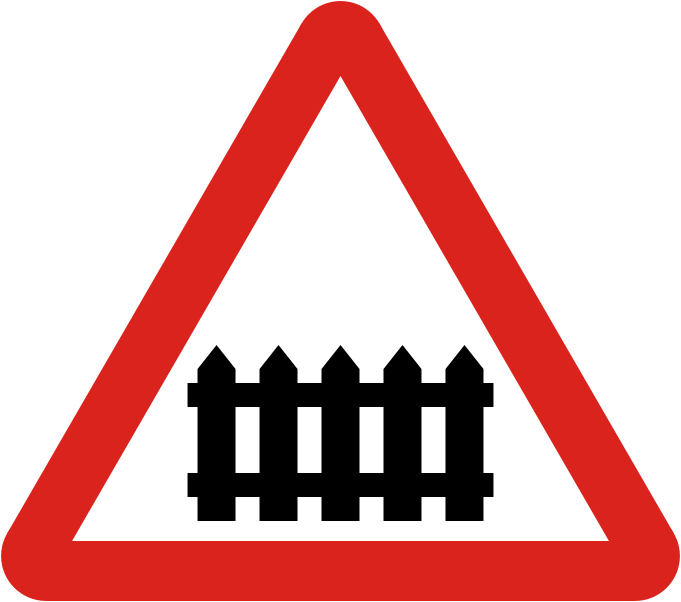 Railway crossing with gate
A level crossing with a gate or barrier ahead.
W41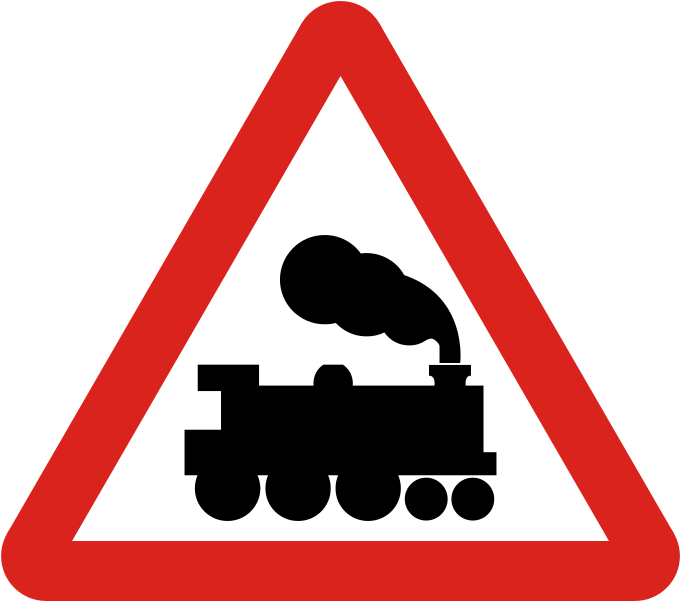 Railway crossing without gate
A level crossing with no gate or barrier. Look both ways for trains.
W42- Pedestrian crossing ahead
A pedestrian crossing ahead. Be ready to stop for people crossing.
W43 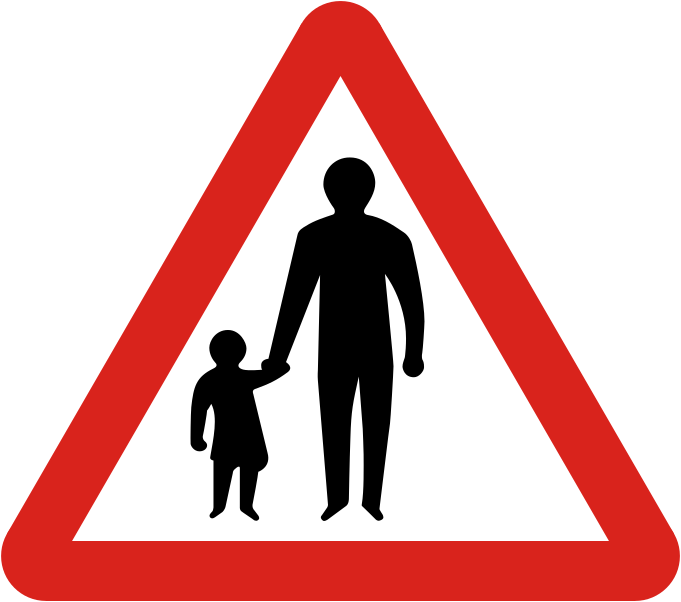 Pedestrians
People may be walking on or beside the road.
W44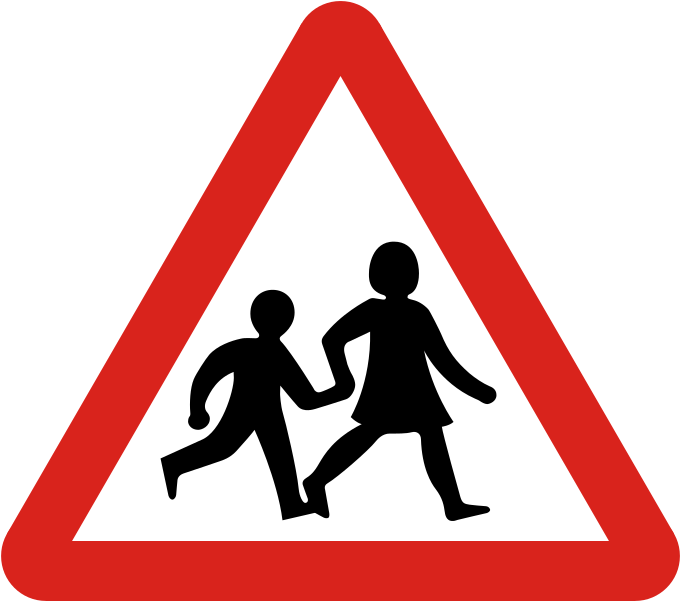 Children
 may be crossing or near the road, often by a school.
W45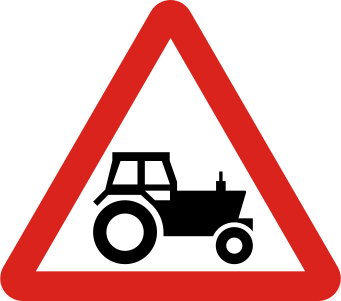 Agricultural vehicles
Slow farm vehicles may be on the road.
W47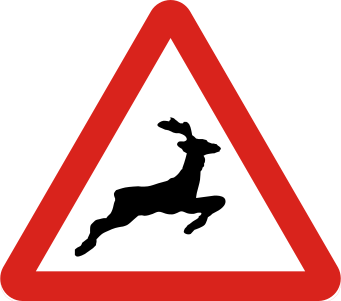 Wild animals
 may cross the road.
W49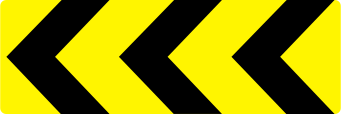 Chevron
Marks the outside of a sharp bend and shows the direction it turns.
W61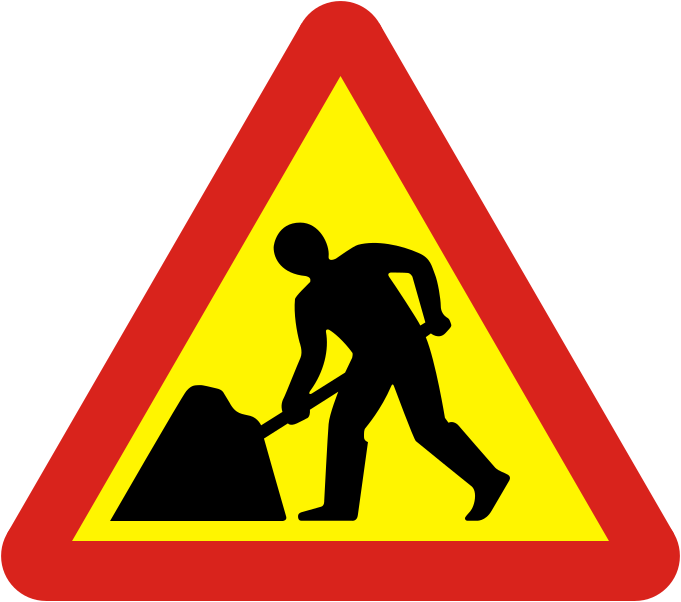 Roadworks
 ahead. Slow down and follow any temporary signs.
W81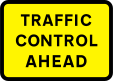 Traffic control ahead
People or signals are controlling traffic ahead, often at roadworks.
W85
Prohibitory signs
Circles with a red border. They tell you what you must not do. A sign showing a vehicle bans that vehicle.
- No entry
No vehicle may enter, usually the wrong end of a one-way road.
R01 - No motor vehicles
Motor vehicles may not enter.
R02 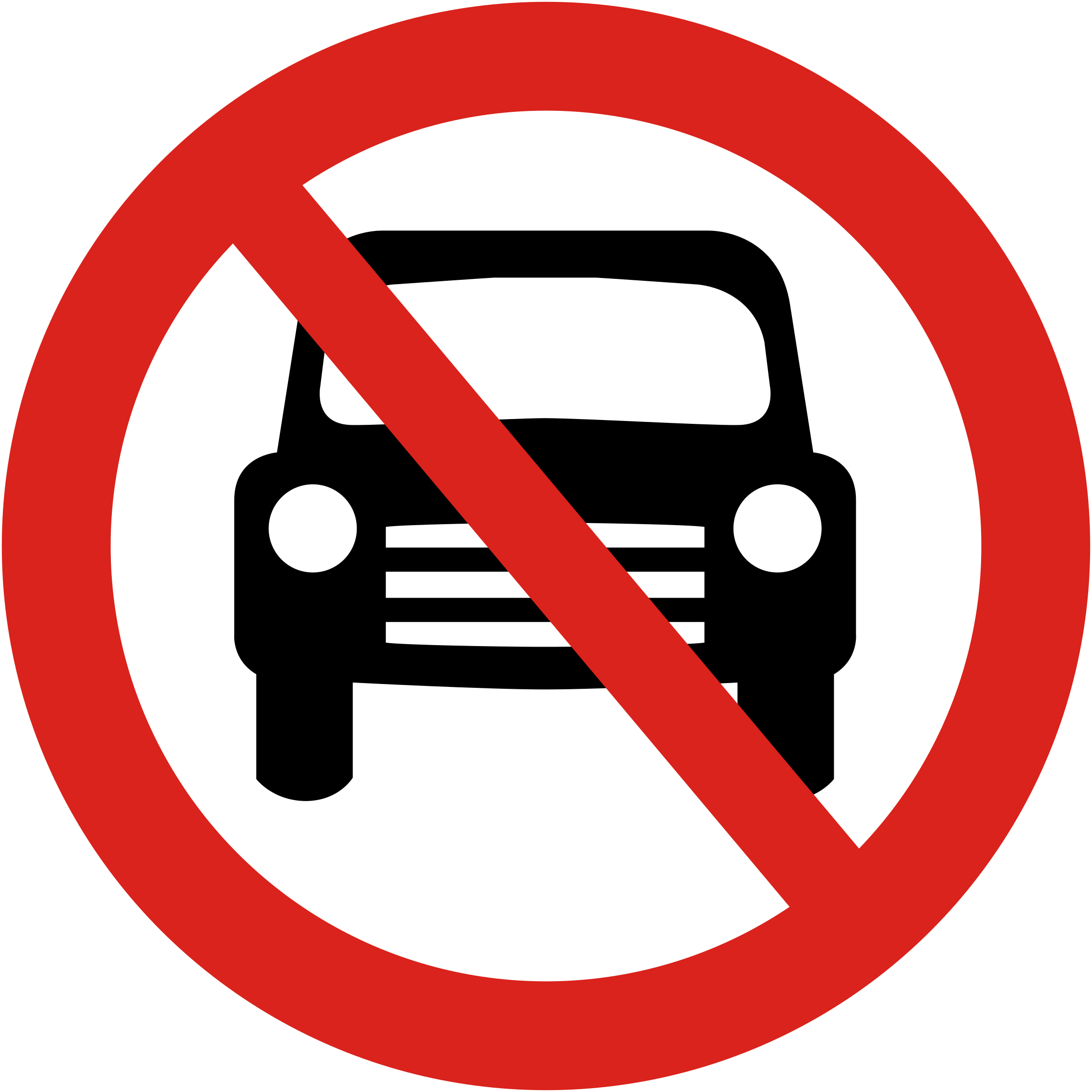 No motor vehicles except motorcycles
Motor vehicles may not enter, but motorcycles may.
R03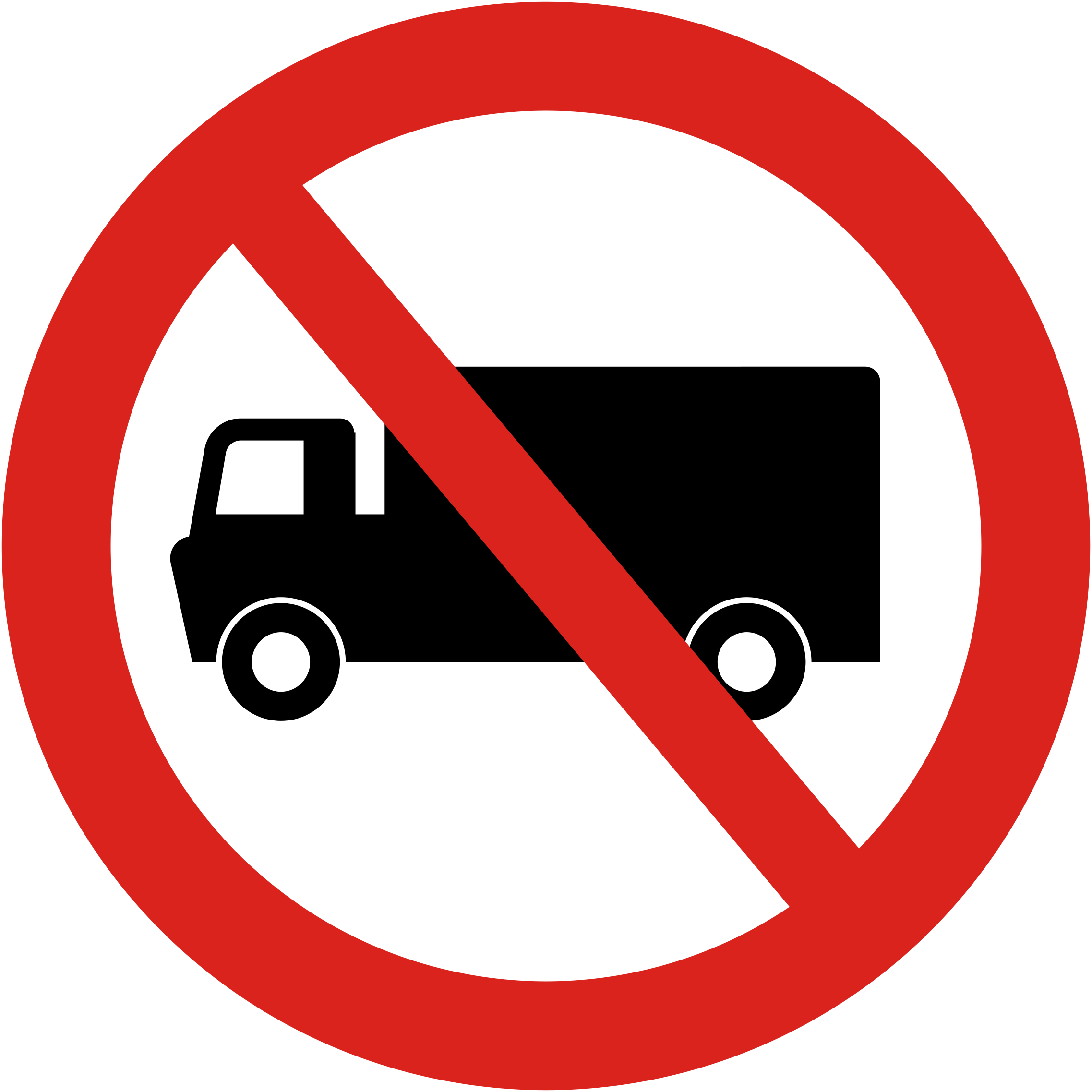 No trucks
Goods vehicles may not enter.
R04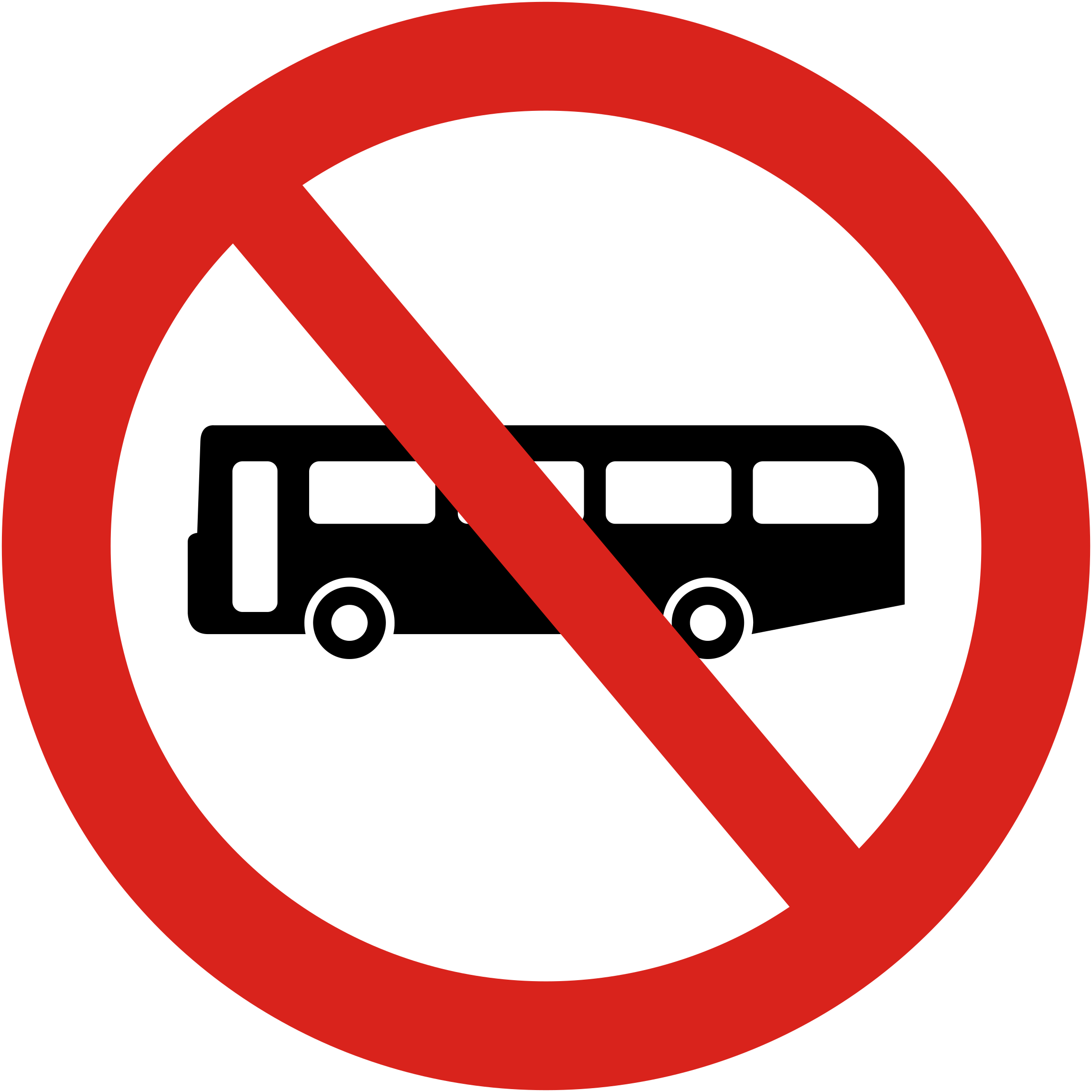 No buses
Buses may not enter.
R05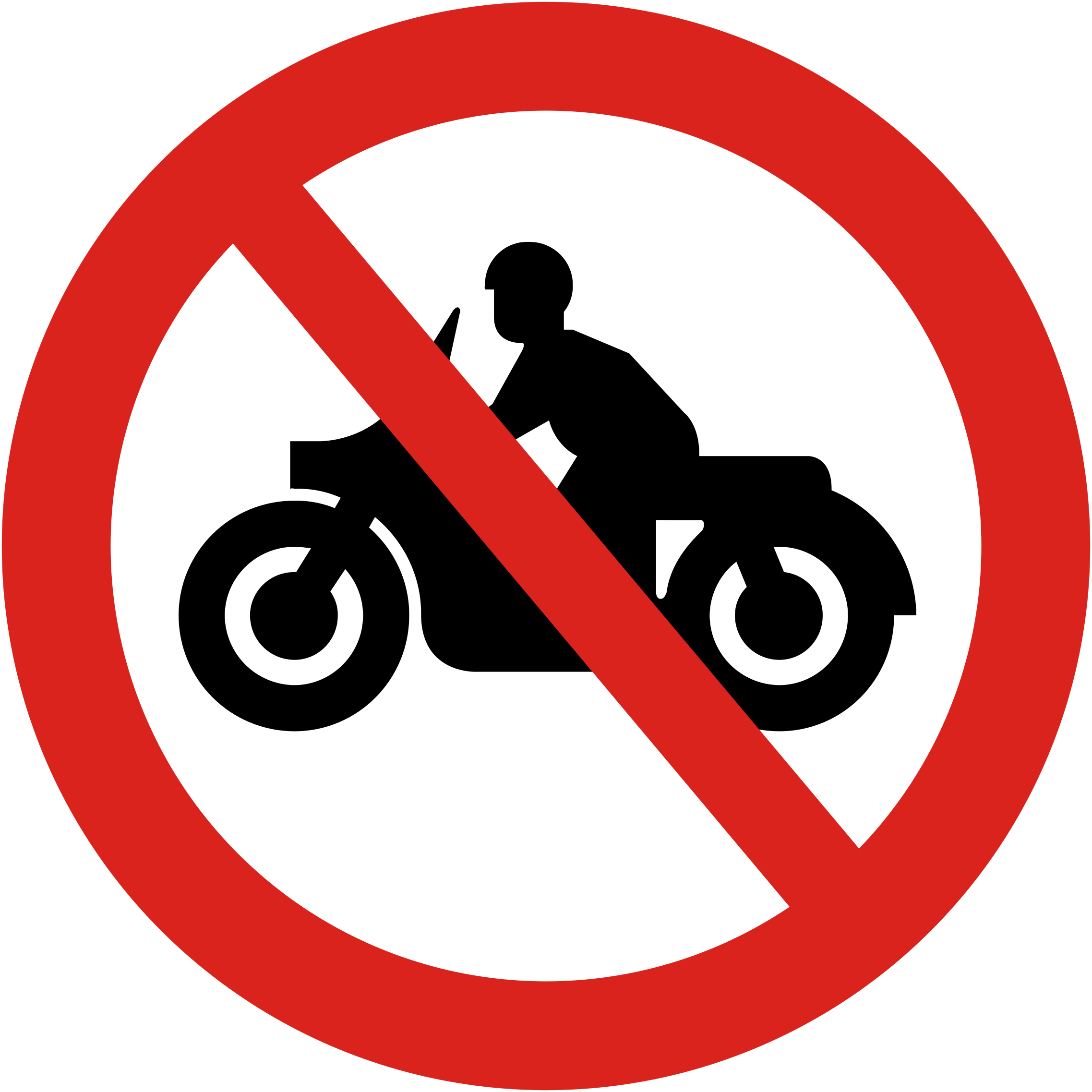 No motorcycles
Motorcycles, including boda bodas, may not enter.
R06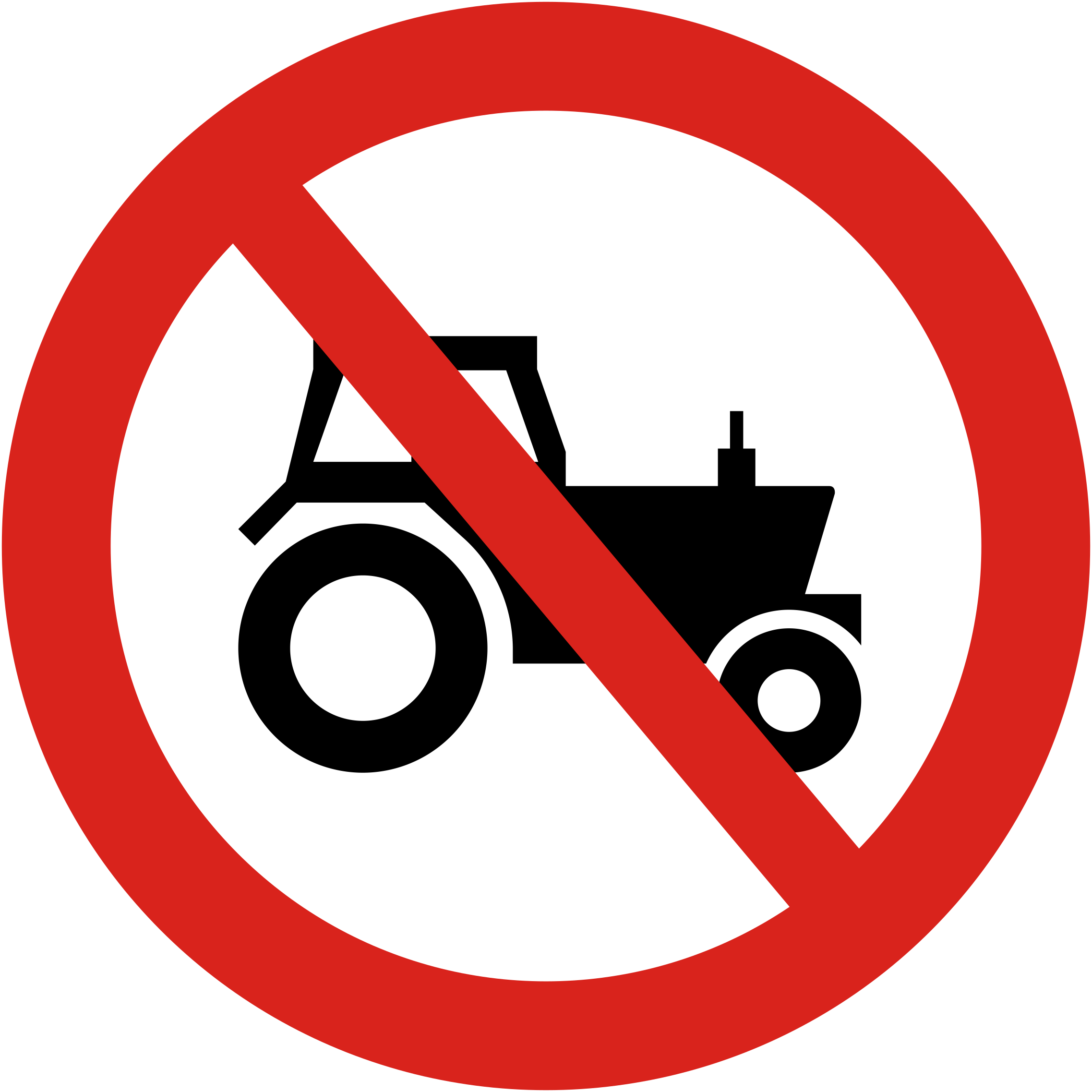 No tractors or slow vehicles
Tractors and other slow-moving vehicles may not enter.
R07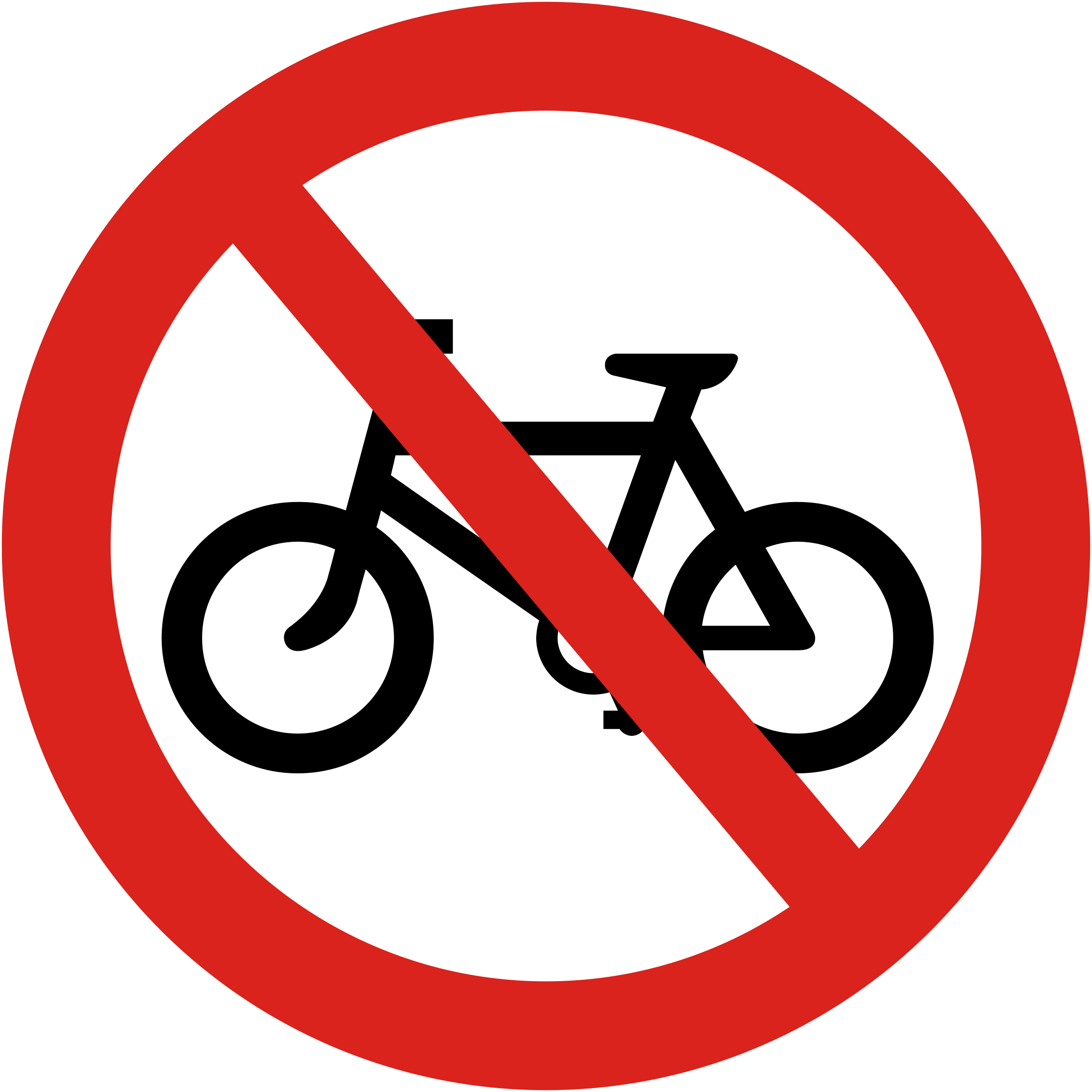 No bicycles
Bicycles may not enter.
R08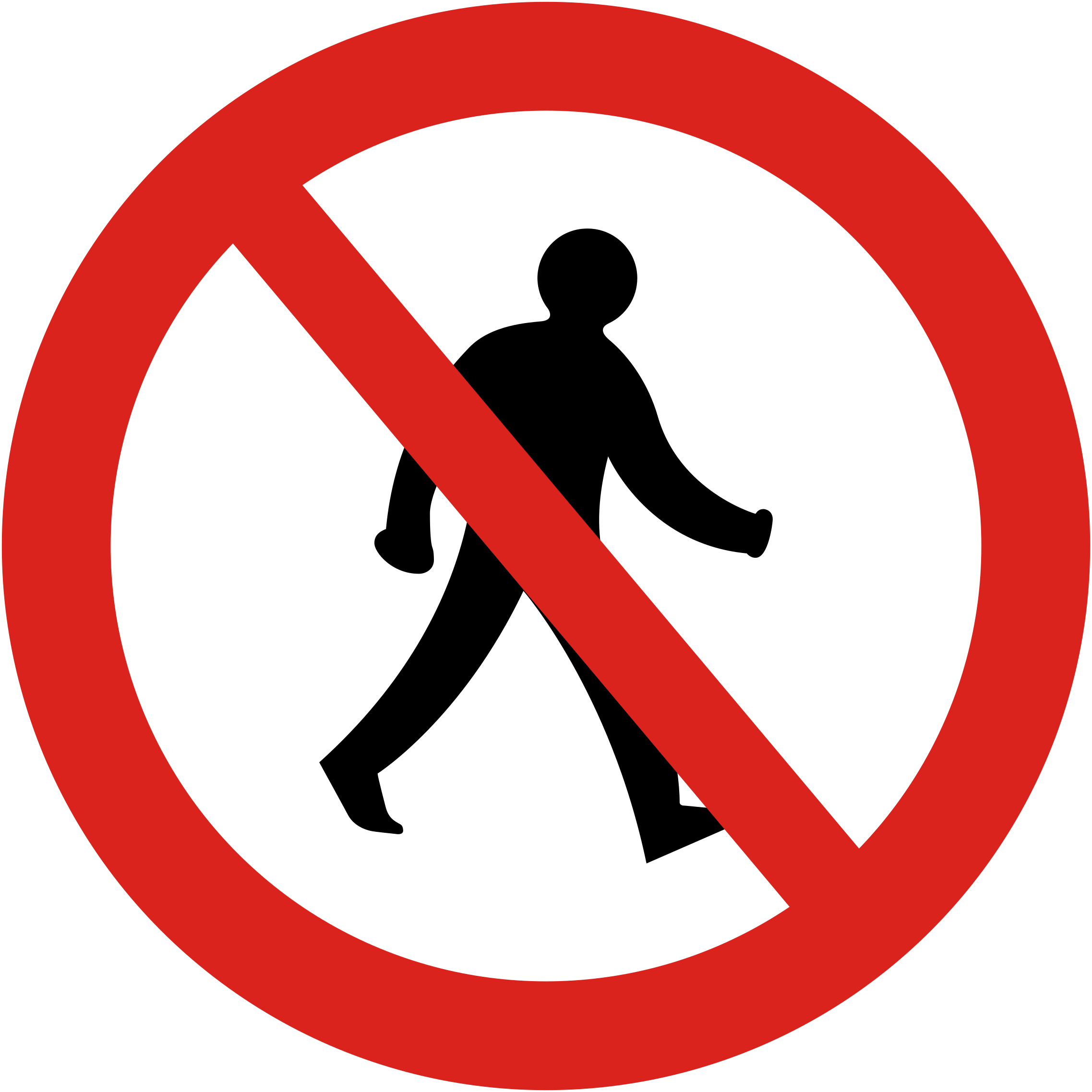 No pedestrians
People on foot may not enter.
R09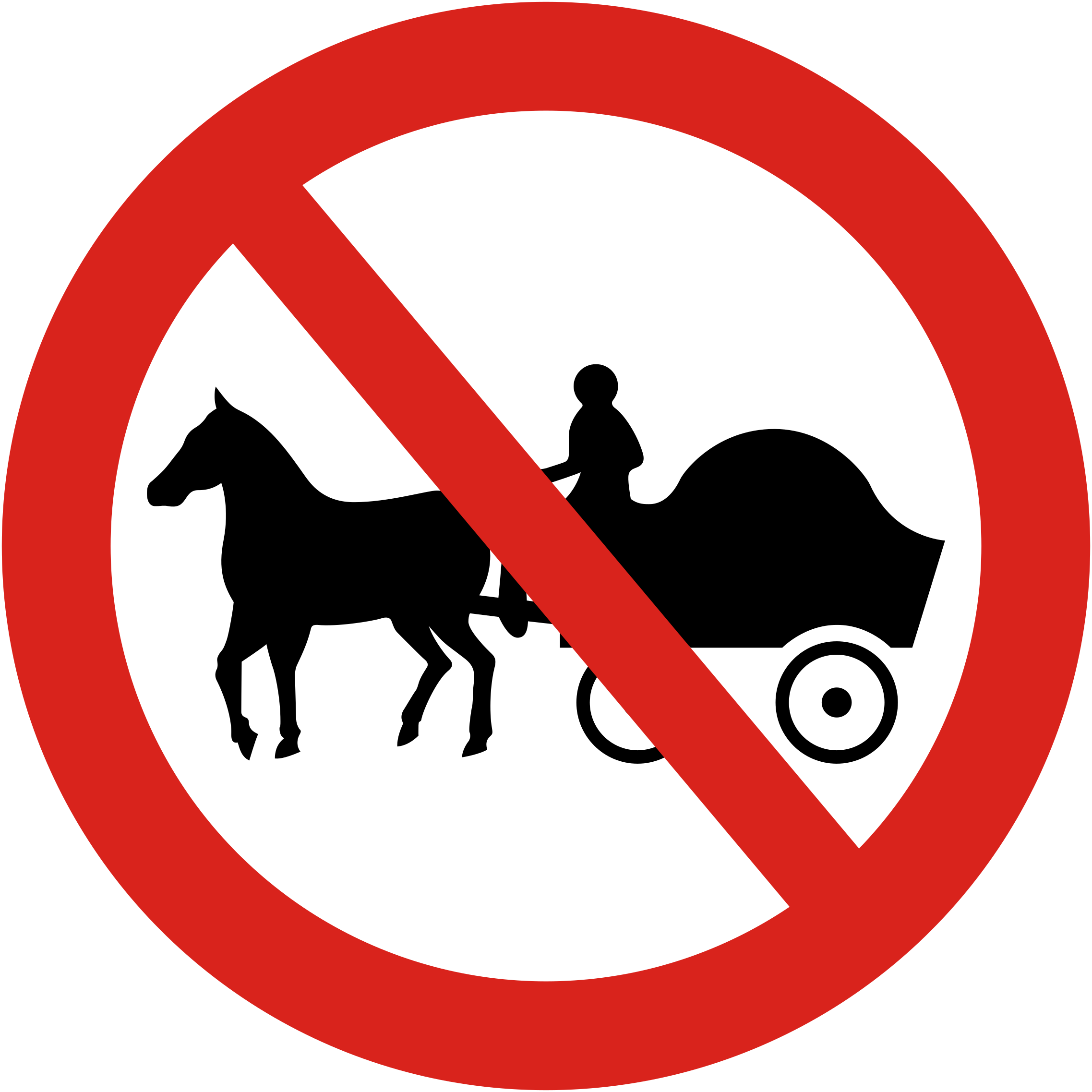 No animal-drawn vehicles
Carts pulled by animals may not enter.
R10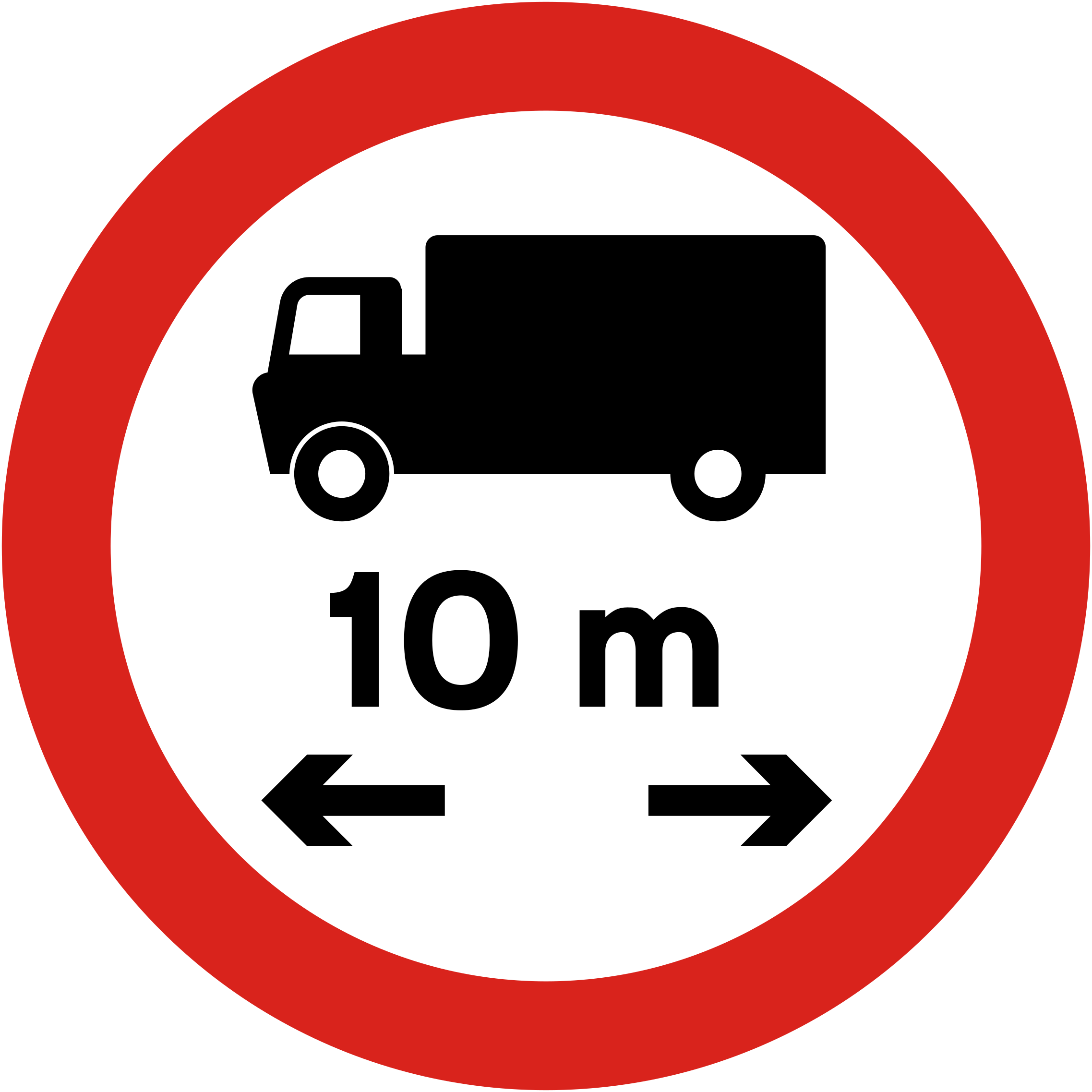 Length limit
No vehicle longer than the length shown.
R21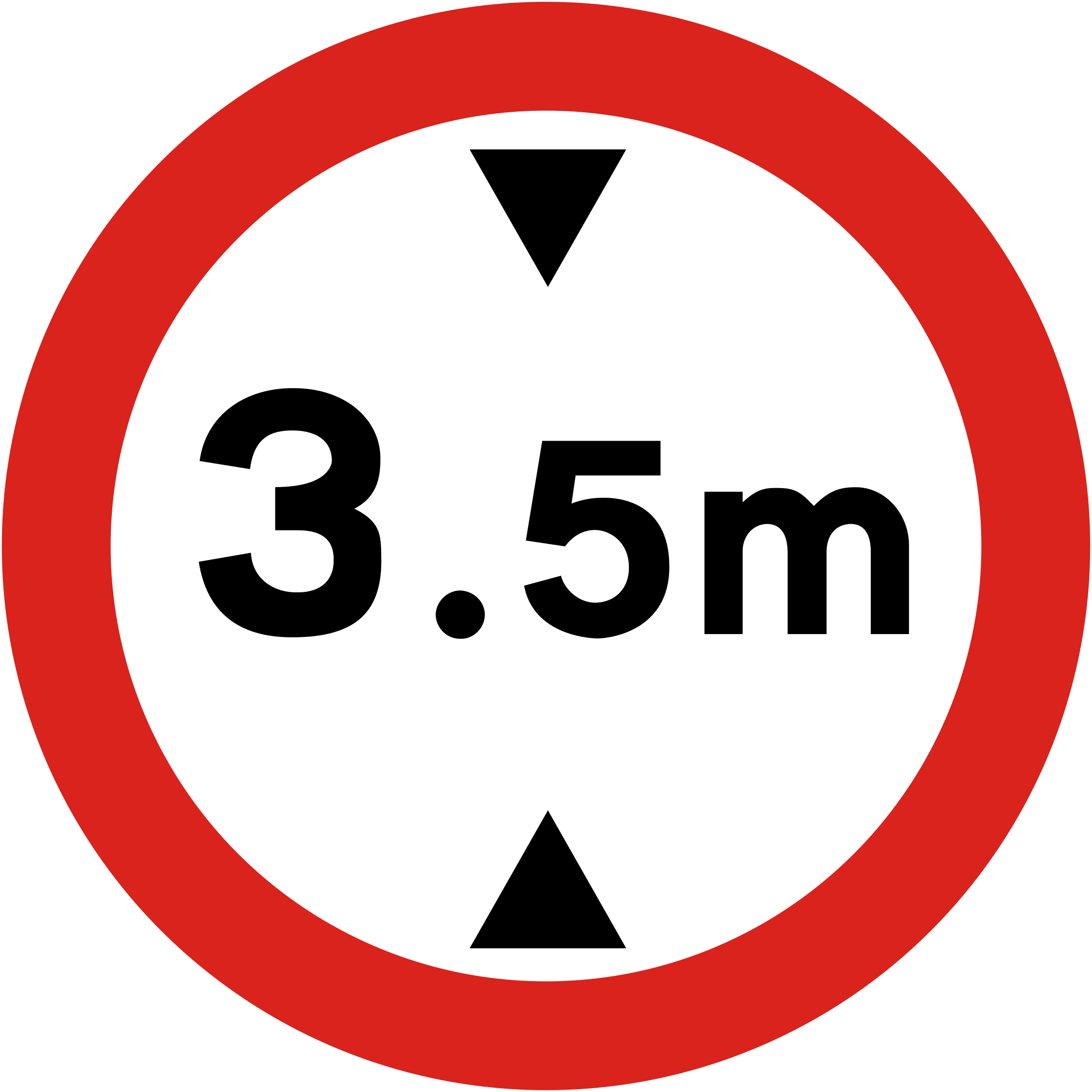 Height limit
No vehicle taller than the height shown.
R22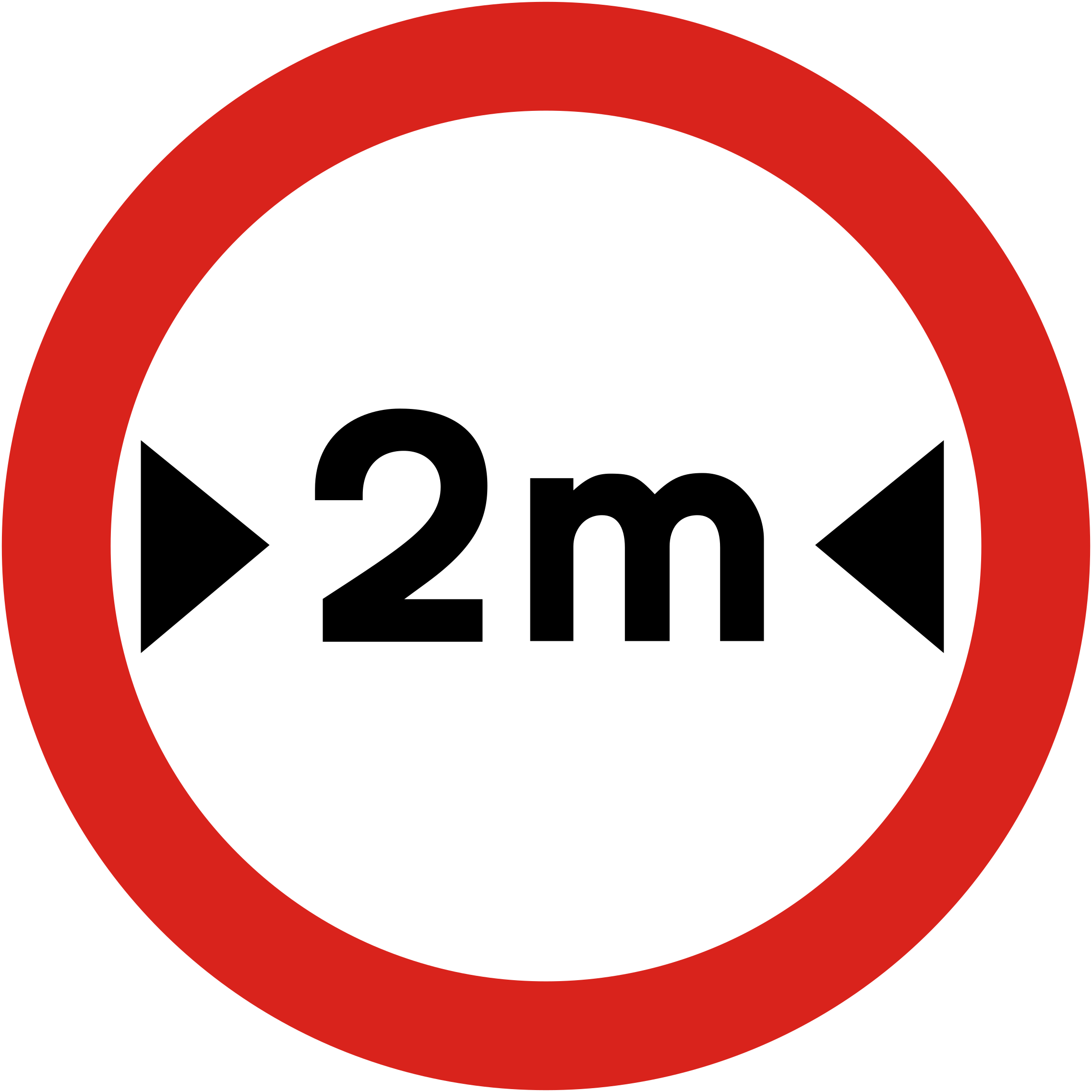 Width limit
No vehicle wider than the width shown.
R23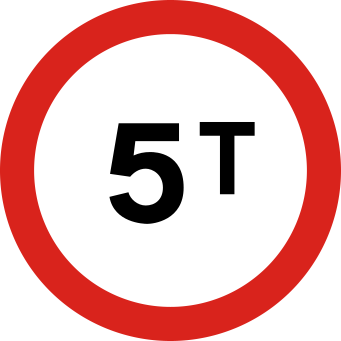 Gross weight limit
No vehicle heavier than the weight shown.
R24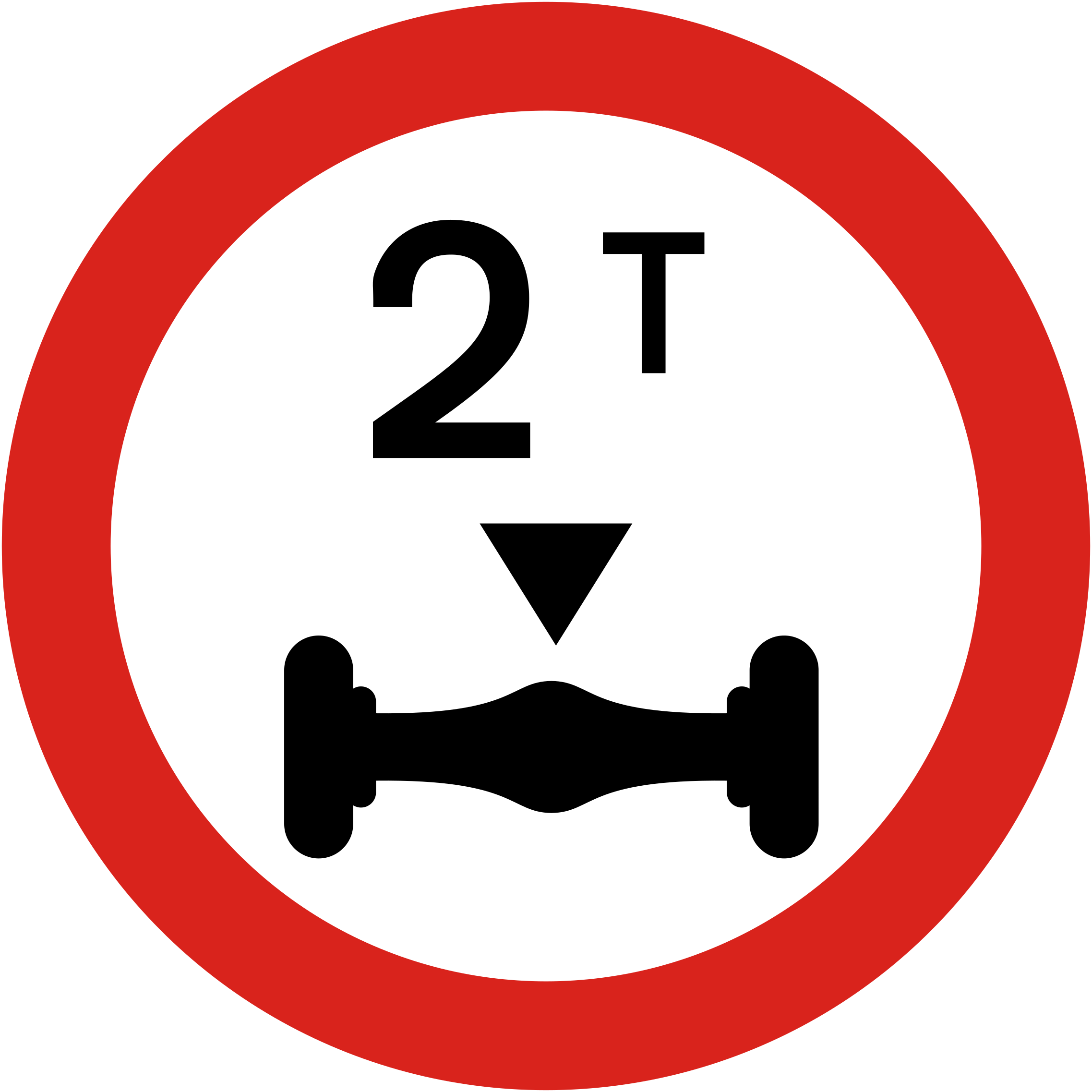 Axle weight limit
No vehicle with more weight on one axle than shown.
R25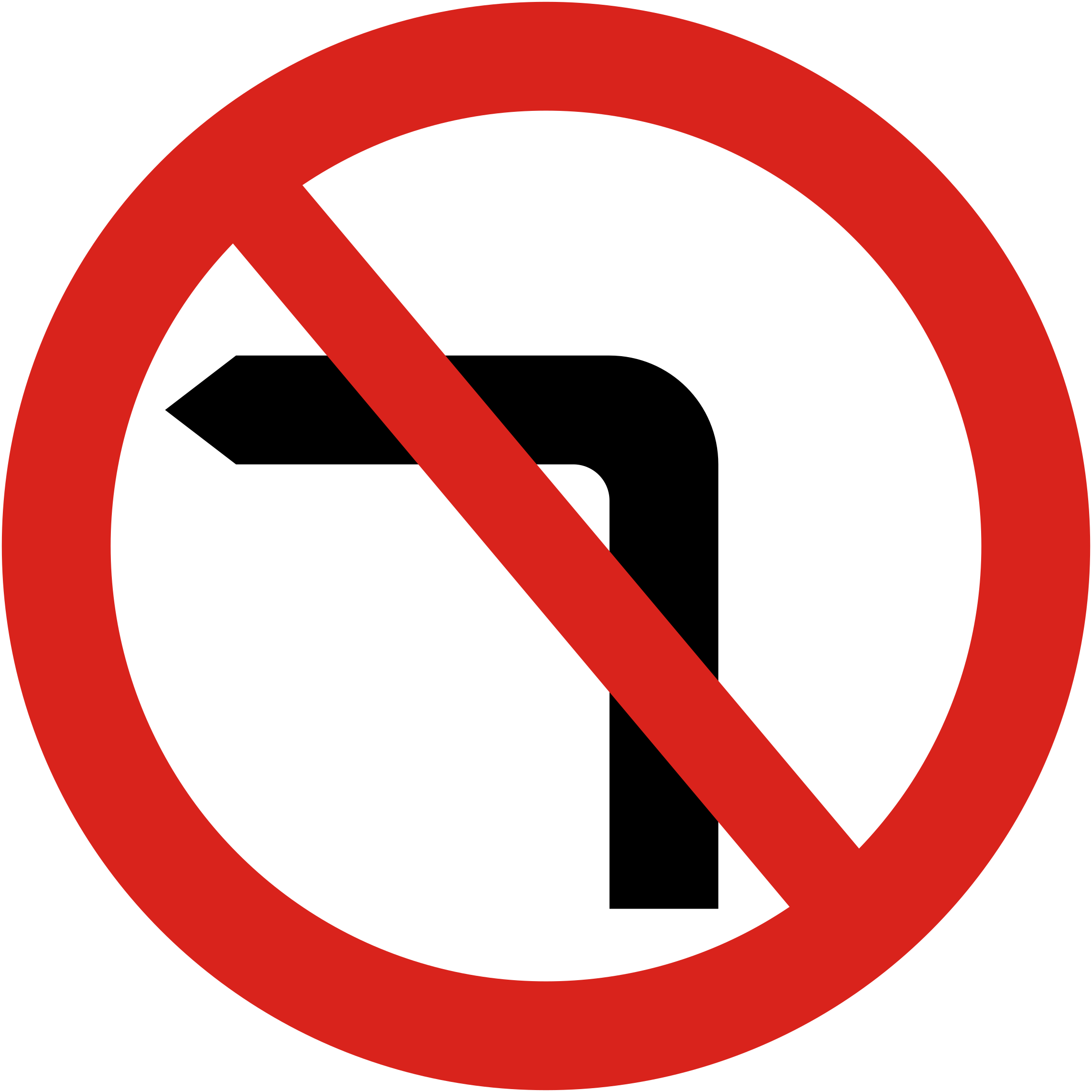 No left turn
You may not turn left here. A mirrored sign bans right turns.
R41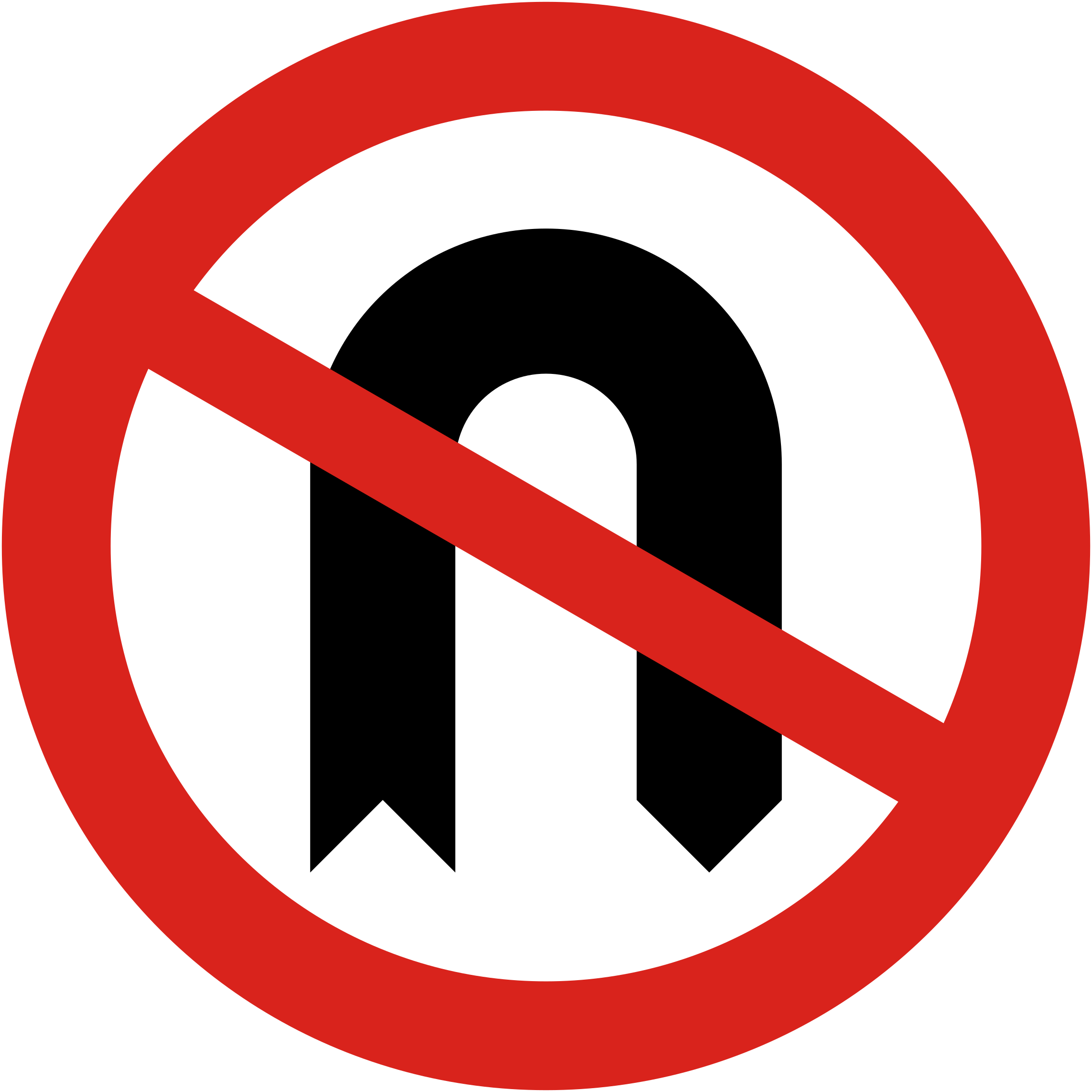 No U-turns
You may not turn around here.
R42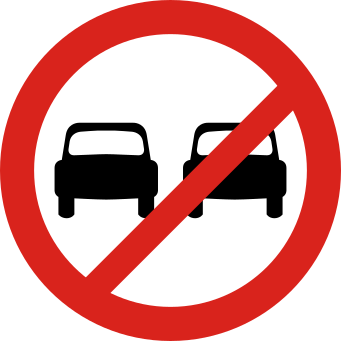 No overtaking
You may not overtake other motor vehicles.
R43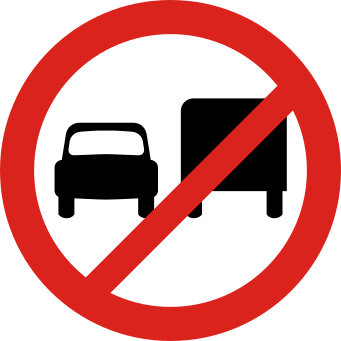 No overtaking by goods vehicles
Goods vehicles may not overtake.
R44- No parking or waiting
You may not park or wait here.
R47 - No stopping or standing
You may not stop here at all, even briefly.
R48 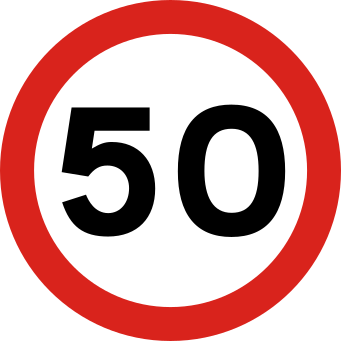 Speed limit
Do not drive faster than the number shown, in kilometres per hour.
R49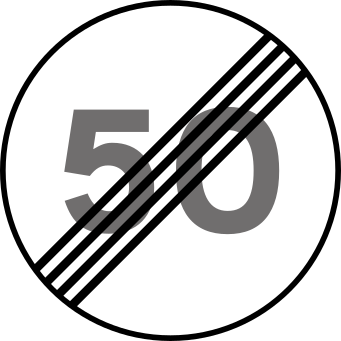 End of speed limit
The speed limit shown no longer applies from here.
R52
Priority signs
These decide who goes first at a junction or a controlled point.
- Stop
Stop completely at the line, then go only when it is safe.
R61 - Give way
Let traffic on the main road go first. Slow down, and stop if you need to.
R62 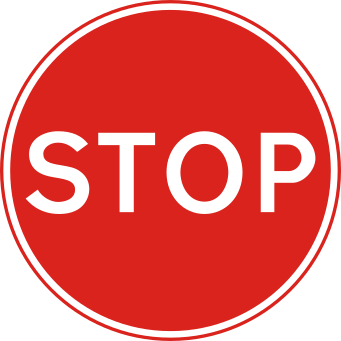 Temporary control: stop
Held by a person controlling traffic, often at roadworks. Stop.
R63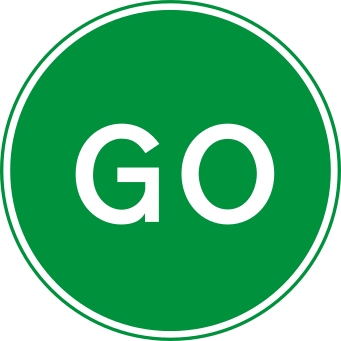 Temporary control: go
Held by a person controlling traffic. You may proceed with care.
R64
Mandatory signs
Blue circles. They tell you what you must do.
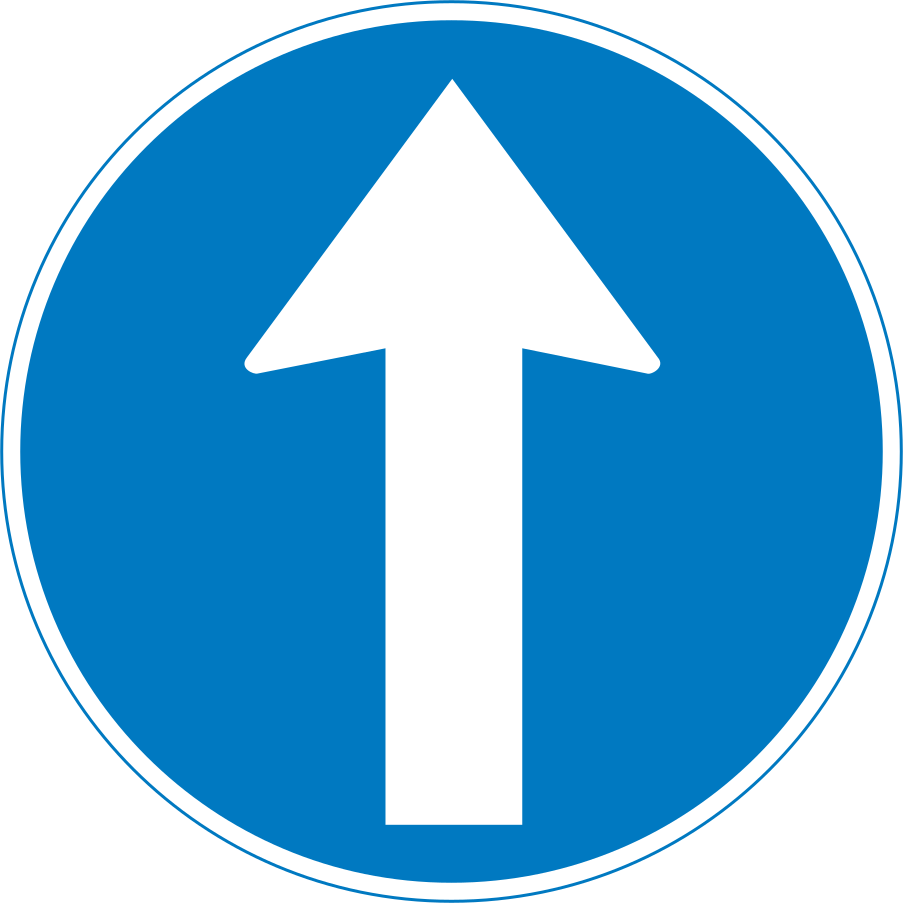 Go straight ahead
You must go straight on.
R71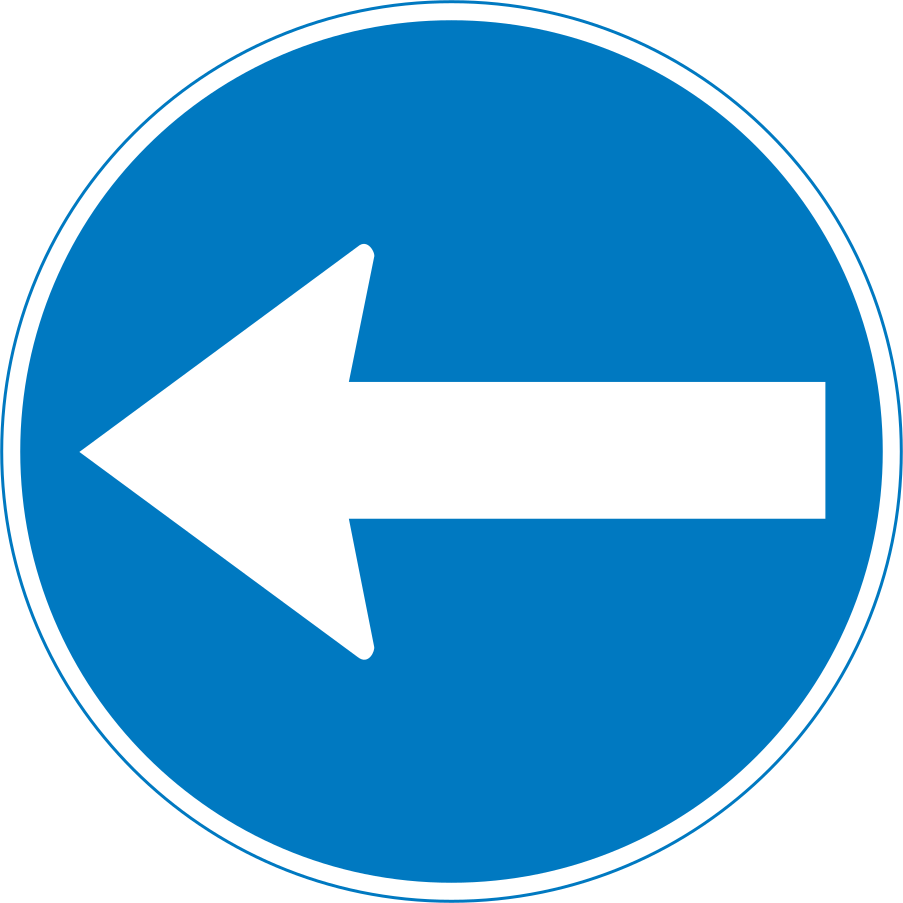 Turn left
You must turn left. A mirrored sign means turn right.
R72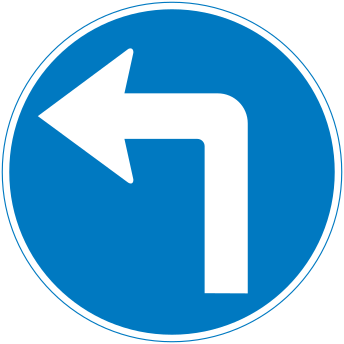 Turn left ahead
You must turn left ahead.
R73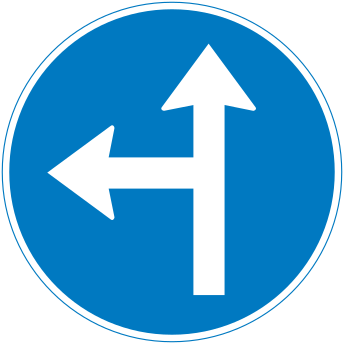 Go straight or turn left
You must go straight on or turn left.
R74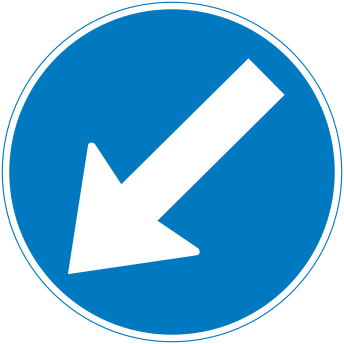 Pass on the left
Keep to the left of the obstruction or island.
R75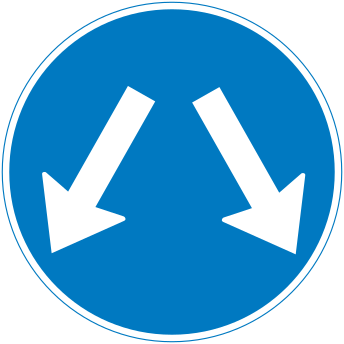 Pass either side
You may pass the obstruction on either side.
R76- Roundabout
Follow the roundabout in the direction of the arrows.
R77 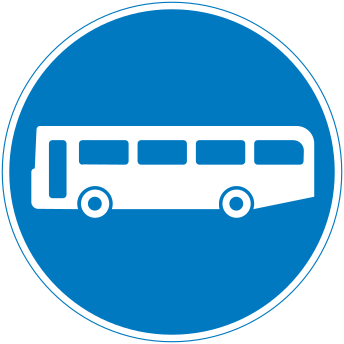 Buses only
Only buses may use this lane or road.
R81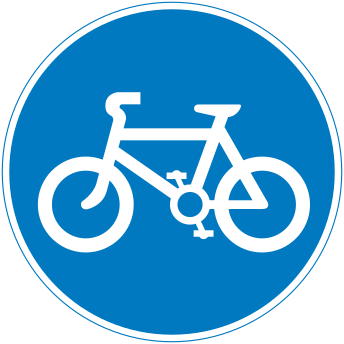 Bicycles only
Only bicycles may use this path.
R82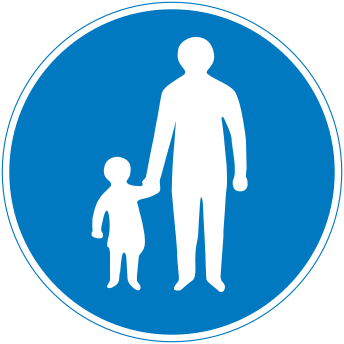 Pedestrians only
Only people on foot may use this path.
R83
Information signs
Rectangles that tell you about the road or the services nearby.
- Pedestrian crossing
Marks the crossing itself. Give way to people on it.
I01 - Hump
Marks a speed hump.
I02 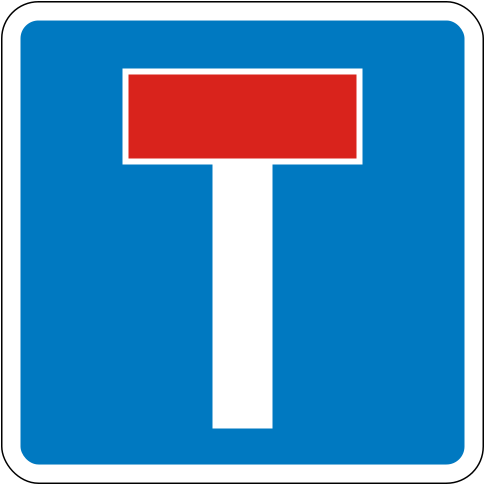 No through road
The road is a dead end.
I03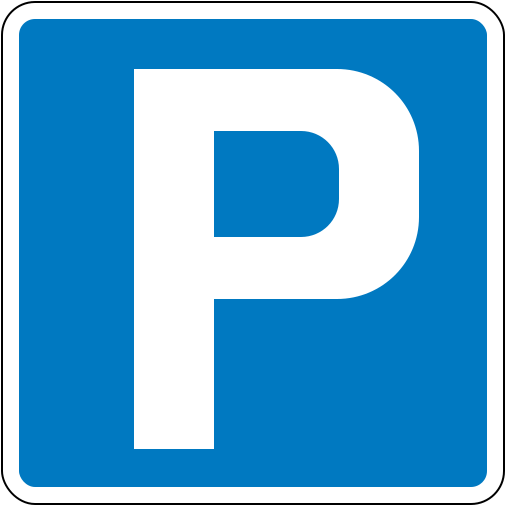 Parking
 is allowed here.
I04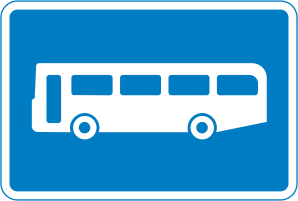 Bus stop
A place for buses to stop.
I05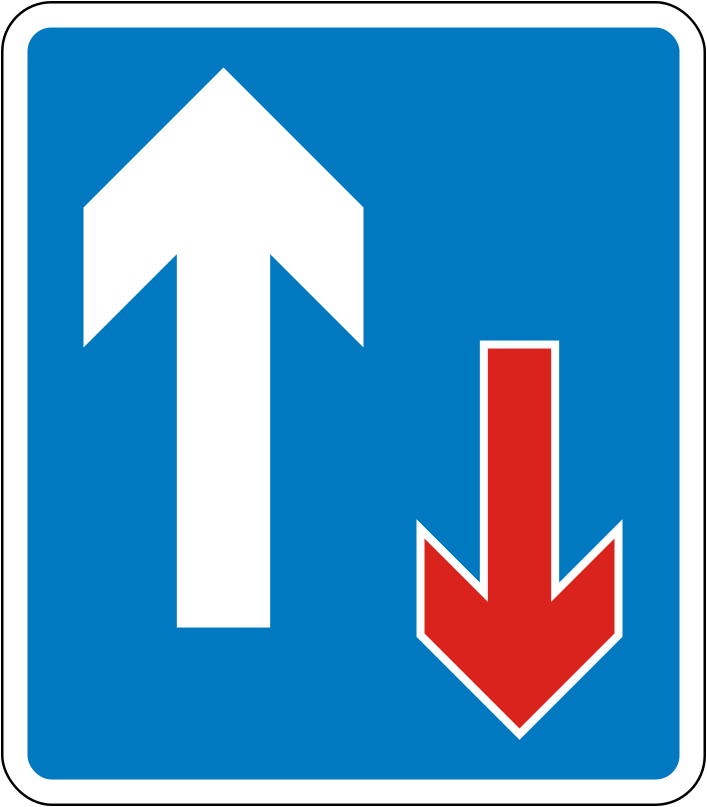 Priority over oncoming traffic
On a narrow stretch, you have priority over vehicles coming the other way.
I06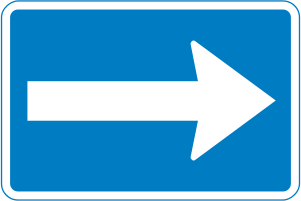 One-way traffic
Traffic on this road flows only in the direction of the arrow.
I07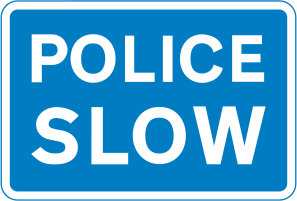 Police control
Police are controlling traffic ahead.
I08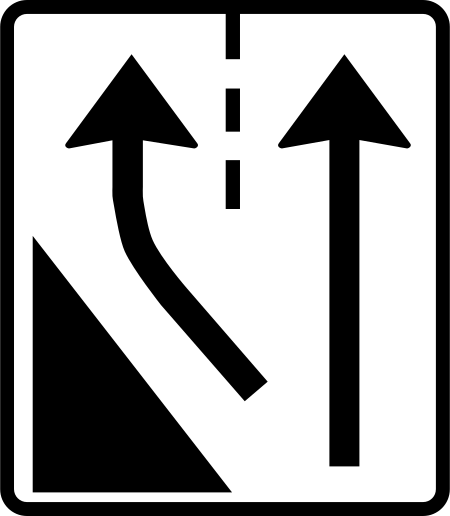 Start of extra lane
An extra lane begins.
I09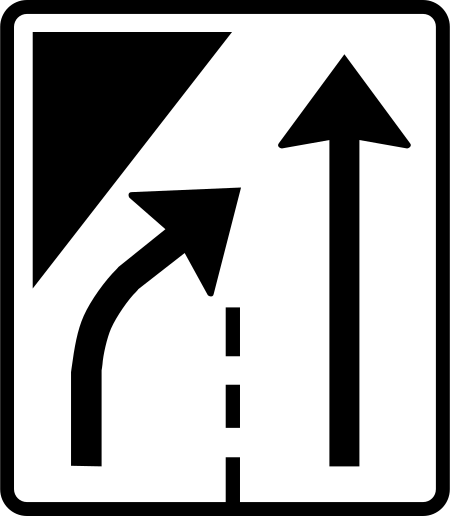 End of extra lane
The extra lane ends. Merge with care.
I10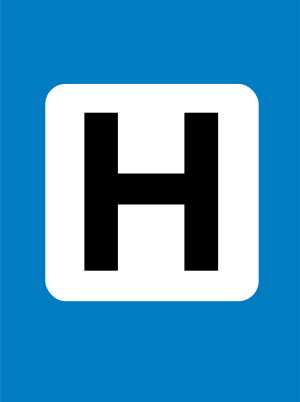 Hospital
A hospital nearby. Drive quietly and watch for emergency vehicles.
I21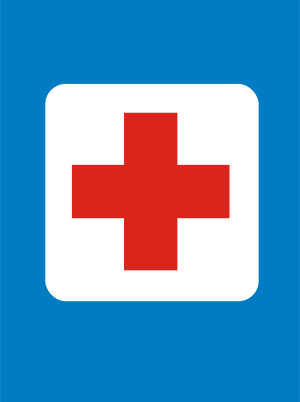 First aid
A first aid point.
I22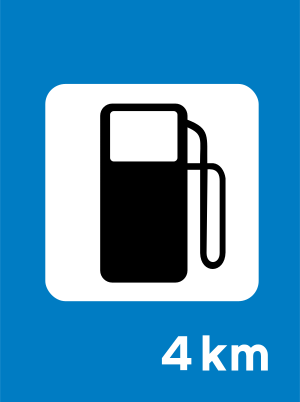 Filling station
Fuel is available.
I25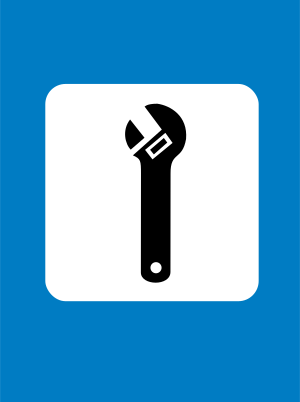 Workshop
A vehicle repair workshop.
I26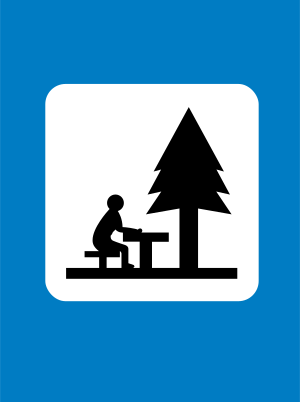 Rest area
A place to stop and rest.
I30
Guidance signs
Direction signs that help you choose a route. Uganda uses different versions for primary roads and other roads.
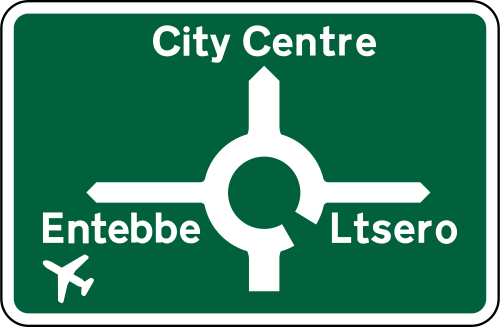 Advance direction: roundabout
Shows the exits of the roundabout ahead and where each one goes.
G01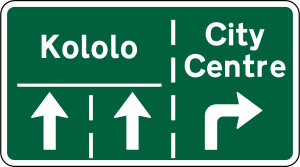 Lane preselection
Shows which lane to be in for each destination.
G05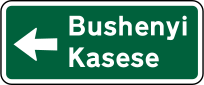 Direction sign
Points the way to a place at the junction.
G11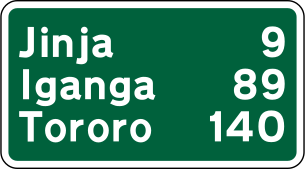 Confirmatory sign
Confirms the road you are on and the distances to places ahead.
G21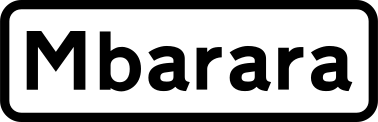 Place identification
Marks where you enter a town or place.
G22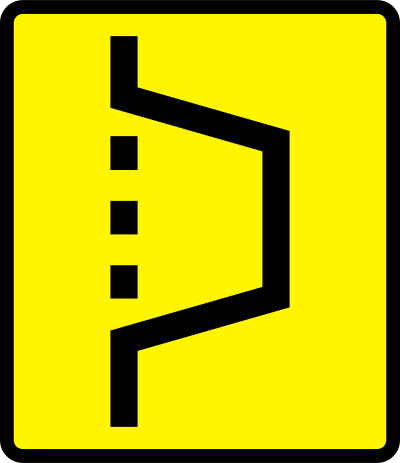 Diversion ahead
The usual route is closed ahead. Follow the diversion.
G31
Supplementary plates
Small plates under a main sign that add detail to it.
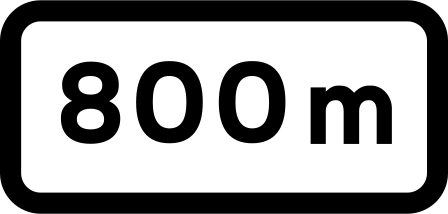 Distance plate
How far ahead the hazard or rule starts.
S01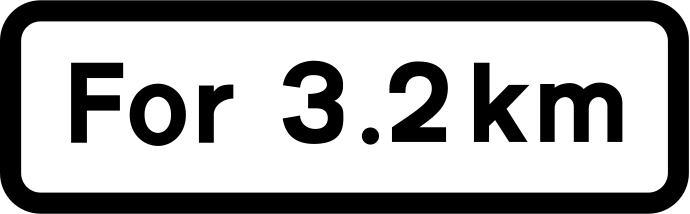 Extension plate
How far the hazard or rule continues.
S02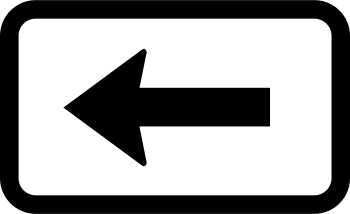 Direction plate
The sign above applies in the direction of the arrow.
S03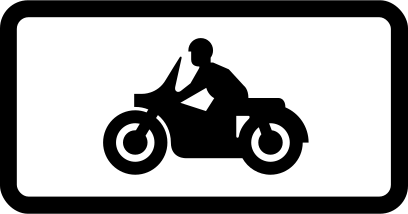 Vehicle category plate
The sign above applies only to the vehicle shown, here motorcycles.
S14
Test yourself on these signs
Reading a list is not the same as knowing it on test day. Uganda Driving Permit Practice quizzes you on these signs and the rest of the theory test, and keeps bringing back the ones you get wrong until they stick.
Prefer paper? Download the chart of all 95 signs and print it.
Common questions
- What are the types of road signs in Uganda?
Uganda's Traffic Signs Manual groups them into warning signs, regulatory signs (prohibitory, priority and mandatory), guidance signs, information signs and supplementary plates. The shape and colour tell you the group before you can read the symbol.
- Are Uganda road signs the same as in the UK?
They are very close, because the system dates from the colonial era, but Uganda uses metric units: speeds in kilometres per hour and distances in metres and kilometres. Uganda acceded to the Vienna Convention on Road Signs and Signals in August 2022, the same standard most of Europe and Africa follows. Uganda drives on the left.
- Which road signs come up in the driving permit test?
Road signs are one of the main topics in the theory test. Expect to name a sign from its picture and to say what you should do when you see it. Stop, Give way, No entry, speed limits, the pedestrian signs and the junction warnings are the ones to know cold.
- Is there a PDF of Uganda road signs and their meanings?
Yes. The printable chart on this page has all 95 signs with their pictures and meanings on four A4 pages, free to download and print.
- What is the difference between a red circle and a blue circle?
A red circle forbids something (no entry, no overtaking, a speed limit). A blue circle orders something (turn left, keep left, buses only).
Getting your permit too? Read how to get a driving permit in Uganda.
Sign codes follow Uganda's Traffic Signs Manual (Ministry of Works and Transport). Sign artwork from Wikimedia Commons. An independent study aid, not affiliated with any government body.